
Indoor Air Quality Testing – Public Building Regulations (Formaldehyde and Benzene)

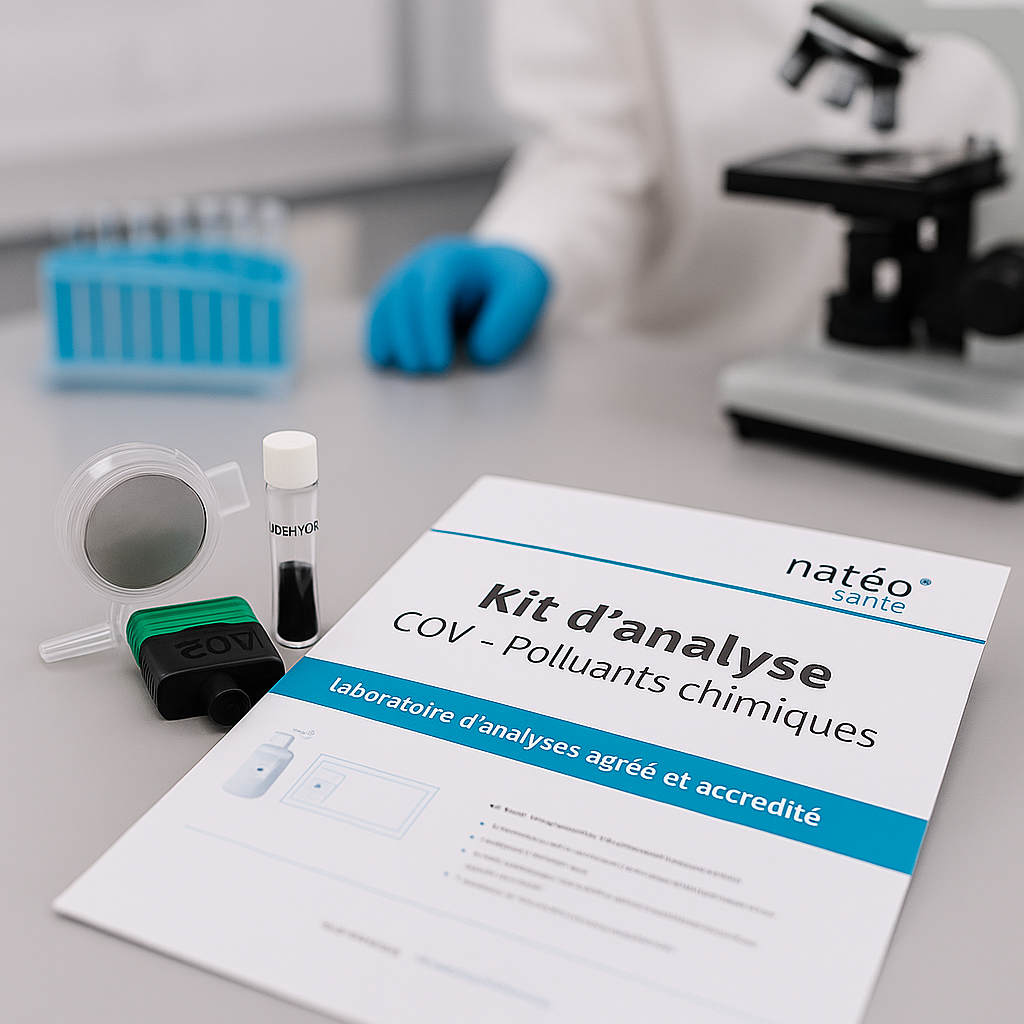
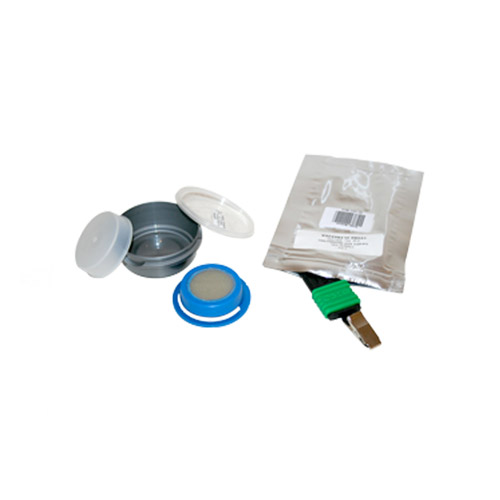
Indoor Air Quality Testing – Public Building Regulations (Formaldehyde and Benzene)
297 € including tax
For several years now, public buildings have been subject to strict regulations regarding indoor air quality. Building managers are required to conduct periodic tests to check for the presence of formaldehyde and benzene, two major pollutants classified as carcinogens or irritants.
With the NatéoSanté testing kit, you have a simple, fast, and compliant solution for assessing these regulated pollutants and taking action if levels are exceeded.
Available by special order
Indoor Air Quality Testing Kit – Public Buildings
Meet your regulatory requirements and protect your occupants
Regulatory framework
- Grenelle II Act – No. 2010-788 of July 12, 2010.
- Decree No. 2011-1727 of December 2, 2011, regarding indoor air quality guidelines for formaldehyde and benzene.
- Decree No. 2015-1000 of August 17, 2015, and Order of June 1, 2016, regarding the monitoring of indoor air quality in certain public buildings.
- New Regulations for 2023 (to be phased in starting January 1, 2023):
- Mandatory IAQ self-assessment every 4 years.
- Formaldehyde and benzene testing campaigns at key stages (construction, renovation, and expansion).
- If the limit is exceeded, further investigations must be conducted and the prefect must be notified.
Affected institutions
- Daycare centers and early childhood care facilities.
- Preschools and elementary schools.
- Middle schools and high schools.
- Recreation centers.
- Healthcare facilities and hospitals.
- Social and medical-social facilities (retirement homes, nursing homes).
- Offices and government agencies that serve the public.
Reference guidelines
- Formaldehyde
- Guideline value: 100 µg/m³ as an 8-hour average (Decree 2011-1727 / ANSES / WHO).
- Threshold for further investigation: 30 µg/m³.
- Benzene
- Guideline value: 10 µg/m³ as an annual average (Decree 2011-1727 / WHO).
Purpose of the kit
- Assess regulatory compliance by measuring formaldehyde and benzene.
- Identify sources of indoor pollution related to materials, furniture, chemicals, or smoke.
- Document your regulatory compliance procedures for public access buildings.
- Develop a corrective action plan in the event that the guideline values are exceeded.
How does it work?
- You will receive a complete, ready-to-use kit.
- Perform the air sampling procedure as described in the instructions (simple, no special equipment required).
- Return of the kit to the COFRAC-accredited laboratory.
- Receive a detailed, interpreted report that you can use immediately to meet your compliance requirements.
The Benefits of NatéoSanté
- Compliance: a solution perfectly tailored to legal requirements for public access buildings.
- Simplicity: easy to use, no technical skills required.
- Reliability: analyses performed by a COFRAC-accredited laboratory.
- Comprehensive support: beyond simply identifying issues, we recommend and implement corrective solutions (air purifiers, filters, source treatment).
Why choose NatéoSanté
NatéoSanté than just provide measurement services. We support you throughout the entire value chain:
- Measure: Accurately detect formaldehyde and benzene.
- Understand: analyze the results and their implications.
- Take action: propose appropriate technical solutions (air purifiers, specialized filters, ventilation optimization).
- Ensure: Provide indoor air quality that meets standards, is safe, and is healthy for your users and staff.
With this kit, you have a ready-to-use tool to meet your regulatory obligations, reassure your users, and quickly address any non-compliance issues.
Additional information
| Weight | 1 kg |
|---|---|
| Dimensions | 20 × 20 × 4 cm |
| Product type | One-time measure |
| Applications | VOCs / Chemical pollutants, Formaldehyde |