
Hair Salon: Air Quality Assessment & Workplace Safety
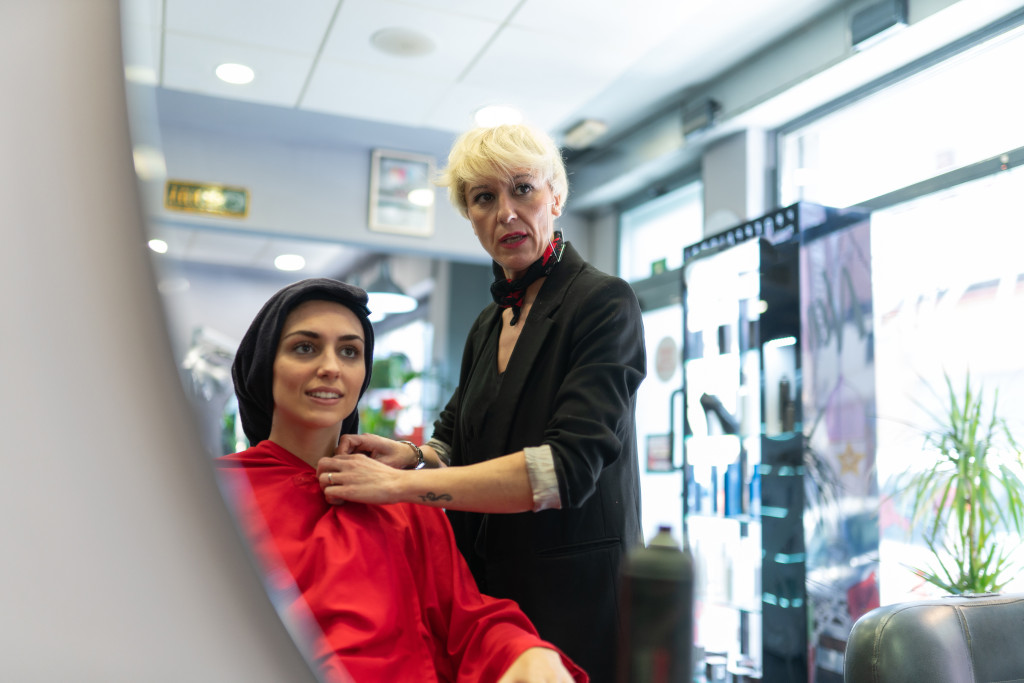
What do your teams breathe in every day?
Every day puts your team—especially your young apprentices—at risk.
The Labor Code requires that these chemical and biological risks be assessed (Art. R4412-1) and documented in the DUERP.
Though invisible, our impact is measurable. We support you every step of the way—from analyzing your operations to implementing a solution tailored to your specific pollutants.
7 days of Air Coach measurements + analysis by the NatéoSanté database NatéoSanté precise risk assessment and the right equipment.
What specific pollutants are associated with your hair salon business?
Pollutants specific to hair salons
- VOCs in hair dyes and perms: ammonia, hydrogen peroxide, resorcinol, p-phenylenediamine. Hair dyes and perms produce a mixture of VOCs classified as sensitizers and potential CMRs.
- Acrylic monomers / Acetone: ethyl methacrylate, monomers used in gel or acrylic nail applications. Potential carcinogens or reproductive toxins. Very high concentrations in nail salons.
- Formaldehyde / Keratin: Keratin straightening treatments often contain hidden formaldehyde. Classified as a Group 1 carcinogen by the IARC. The permissible exposure limit (PEL) is 0.3 ppm, effective as of the May 2023 regulation.
- Hairsprays and setting sprays: release of microparticles and VOCs with each use. Accumulation in confined spaces. Chronic respiratory irritants.
- Disinfectants / Biocides: Disinfection of tools between clients. Quaternary ammonium compounds, alcohols, cleaning products. Cumulative exposure throughout the day.
- CO₂ & Lockdown: Often small rooms with inadequate ventilation. CO₂ and airborne particles build up. Chronic fatigue and frequent headaches among staff.
Mapping Air Quality Risks by Veterinary Area
Each area of your facility has its own pollution profile. Our assessment helps you prioritize actions:
| Clinic Area | Risk level | Primary pollutants targeted |
| hair coloring station | review | VOCs, ammonia • Peroxide • CMR |
| nail salon area | review | Acrylic monomers • Acetone • CMR |
| Keratin straightening treatment | moderate | Formaldehyde • VOCs • Irritants |
| Haircut / Blowout | moderate | Lacquers • Sprays • Particles |
| Home / Checkout | low | CO₂ • Residual VOCs |
Occupational hazards in hair salons: Who is exposed to air pollution?
In a hair salon, all team members are affected by indoor air quality, but to varying degrees and for very different reasons.
- Hairdressers and colorists are subject to direct and prolonged exposure to volatile organic compounds (VOCs) from hair dyes, perms, and hairsprays, spending up to 8 hours a day in a chemically laden environment. Occupational dermatitis and asthma are the leading causes of recognized occupational diseases in the hairdressing industry (Tables 65 and 66 of the CNAMTS).
- Nail technicians and nail technicians specializing in artificial nails work in the most exposed area of the salon. During application, concentrations of acrylic monomers and acetone reach their highest levels. These monomers are classified as CMR (carcinogenic, mutagenic, or reprotoxic substances): enhanced medical monitoring is recommended for this group.
- Beauticians, for their part, are exposed to a cumulative buildup of skincare products, waxes, eyelash and eyebrow dyes, and hairsprays throughout the day. This accumulation of VOCs poses a chronic sensitization risk, which is the cause of many occupational allergies.
- Reception and cashier staff, although located away from workstations, are not spared: waiting areas have high CO₂ levels and residual VOCs from throughout the trade show. Displaying your indoor air quality (IAQ) policy at the reception desk sends a strong message of confidence to your customers.
According to the INRS, the respiratory tract is the primary route of exposure to chemicals in salons. Risk assessments, an inventory of safety data sheets (SDS), measurements of actual VOC concentrations over a 7-day period, and the implementation of collective protection at the source must be included in your Single Document for the Assessment of Occupational Risks (DUERP).
Recognition as an occupational disease
These exposures are directly related to items No. 43 (aldehydes), No. 45 and No. 66 (allergic asthma and respiratory disorders), and No. 84 (organic solvents) of the general regulations.
Glossary of Terms Related to Veterinary Indoor Air Quality (IAQ) Regulations
- 8-hour OEL / OEL: occupational exposure limit (8-hour average) at the workstation.
- CMR: carcinogenic, mutagenic, or toxic to reproduction.
- MSDS: Material Safety Data Sheet for the chemical product; required at the workplace.
- CPE / PPE: collective protective equipment (priority) / personal protective equipment.
What are the regulatory requirements for your hair salon?
The Regulatory Action Plan for Your Compliance
The Labor Code requires all employers to assess and prevent chemical hazards in their DUERP, which is mandatory for employers with even a single employee and must be updated annually.
- Labor Code, Art. R4412-1 – Risk Assessment for Hazardous Chemical Agents
- DUERP required starting with the first employee – annual update (INRS)
- Formaldehyde OLD 0.3 ppm – May 25, 2023 Decree (keratin straightening treatments)
- Order of July 13, 2006 – Restrictions on Cosmetics Containing Formaldehyde
- A Safety Data Sheet (SDS) is required for each product used
- INRS-recommended local exhaust ventilation for nail salons and hair coloring stations
What the NatéoSanté assessment NatéoSanté to your DUERP
- Actual 7-day measurements: under your actual working conditions
- NatéoSanté Industry Analysis NatéoSanté A 15-Year Comparison of Data from Your Industry
- Charts & raw data: ready to use directly in your single document
- EOLIS Recommendation: Collective protective equipment compliant with the Labor Code
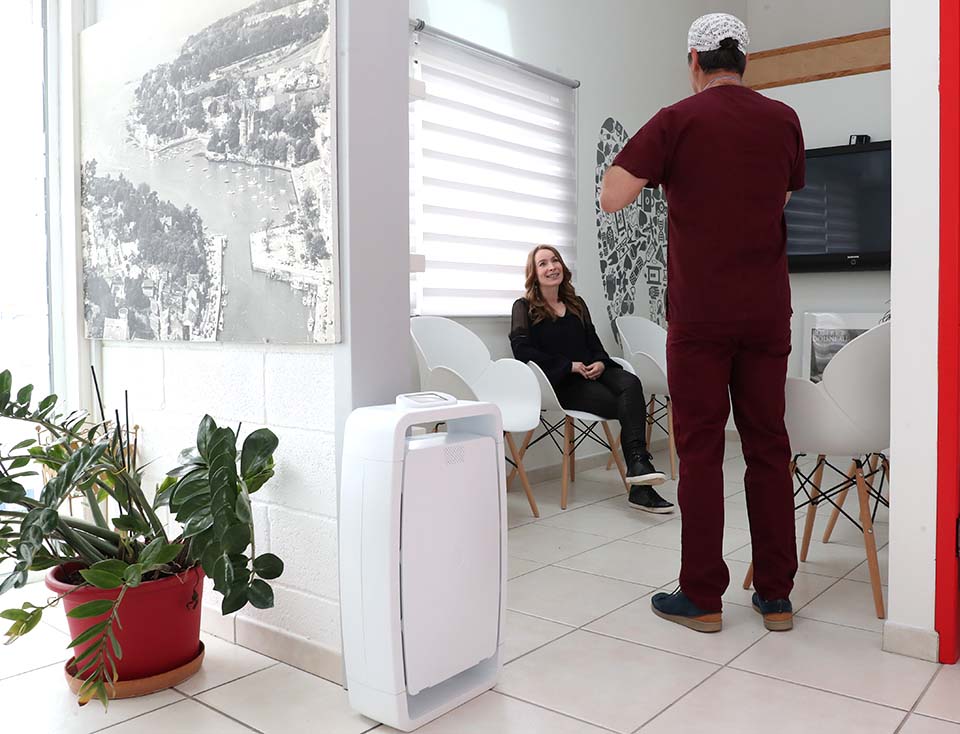
Case Study: From Assessment to Compliance for a 60-square-meter Hair Salon
This representative case is drawn from the NatéoSanté database, which contains 15 years of QAI diagnoses in the veterinary field.
The context of the case study on air quality in a hair salon
Unisex hair salon in an urban area, with 60 m² of floor space (cutting area with 4 chairs + 2 shampoo stations + technical coloring area), featuring the shop’s original single-flow mechanical ventilation system. The team consists of 1 owner-stylist + 1 senior stylist + 2 apprentices (ages 17 and 18), working an average of 9 to 10 hours per day, 6 days a week. Typical services: 25 to 30 color treatments per week, 8 to 10 bleaching/highlighting treatments, 2 to 3 Brazilian straightening treatments, and daily use of hairsprays, styling sprays, and conditioners.
The trigger
Apprentices experiencing recurring headaches at the end of the day, skin irritation on their hands despite wearing gloves, a lingering sense of odors even after ventilation, and the boss’s growing concern about legal liability regarding the young work-study students. The salon wants to objectively document exposures in the DUERP and anticipate questions from occupational health professionals.
The diagnosis: 7 days of continuous monitoring
An Air Coach Pro sensor was positioned in the salon’s technical area at breathing height and set up to monitor a full week of actual activity (Monday through Saturday). Continuous measurements were taken every 5 minutes: CO₂, total VOCs, formaldehyde, fine particulate matter (PM2.5), temperature, and humidity. Peaks in VOCs and formaldehyde correlate with technical procedures (mixing hair dyes, applying straightening treatments). No interventions during the 7-day period.
- VOCs / Solvents, non-compliant: Maximum peak of 7.8 ppm after mixing dyes, i.e., 7.8 times the INRS threshold (1.0 ppm). Average: 1.3 ppm. Ammonia, persulfates, resorcinol – recognized respiratory sensitizers. Occupational asthma, contact dermatitis (MP Table No. 66 RG).
- Formaldehyde, non-compliant: maximum peak of 110 µg/m³ during biopsy preparation, which is 3.2 times the 8-hour VLEP threshold (Decree 2011-1727). The pollutant persisted for 2 to 3 hours after the vials were opened.
- Fine particulate matter (PM2.5), non-compliant: maximum peak of 35 µg/m³ during Brazilian hair straightening treatments, or 3.7 times the 8-hour OEL (30 µg/m³, Decree 2011-1727). Average 35 µg/m³ – exceeding the threshold daily. CMR1B carcinogen (IARC) – documented nasopharyngeal cancer.
Source: hair straightening keratins, certain disinfectants. - Fine particulate matter (PM2.5): Caution advised —peak levels reached 28 µg/m³ during brushing and hairspray application (1.9 times the WHO threshold of 15 µg/m³). Average: 9 µg/m³. Aerosols from hairsprays, sprays, and bleaching powders are present in the air. Respiratory comfort is impaired but does not reach the level of chronic non-compliance.
- Enclosed space (CO₂), proper ventilation: one-time peak of 1,220 ppm (Saturday afternoon, living room full), average 680 ppm. The mechanical ventilation system effectively removes CO₂ and aerosols over time. Biological indicator: peak = high occupancy + insufficient ventilation.
The catch is that the mechanical ventilation system exhausts air but does not filter out chemicals
The salon’s ventilation system effectively removes CO₂ and aerosols over time. However, it is completely ineffective against formaldehyde and hair dye solvents, which are chemical molecules that only a system with high-density activated carbon filtration can absorb. During a Brazilian blowout, the formaldehyde concentration skyrockets to 3.7 times the occupational exposure limit at the hairdresser’s breathing height. The mechanical ventilation system does not refresh the air quickly enough: the hairdresser and the apprentice inhale these carcinogenic molecules throughout the entire procedure.
The overall exposure index
82/100
A polluted environment. A worrying situation. Chemical treatments (coloring, bleaching, straightening) generate persistent chemical pollution. This is typical of hair salons where standard ventilation systems mask the actual exposure to carcinogenic or sensitizing chemical molecules—particularly among young apprentices exposed as early as age 16.
Our recommendation: Eolis Air Manager 600 S
The living room’s mechanical ventilation system is effective for CO₂ and particulate matter over time, but it is structurally incapable of capturing chemical molecules: no ventilation system, no matter how efficient, can absorb formaldehyde or hair dye solvents; a high-density activated carbon filter is required for that.
Analysis of the NatéoSanté decision matrix NatéoSanté formaldehyde at 3.7× the occupational exposure limit, VOCs at 7.8× the limit value, 60 m² floor area, team including apprentices exposed for 9–10 hours/day) points toward the EOLIS Air Manager 600 model with a dedicated hair salon filter, to supplement the existing mechanical ventilation system, not to replace it.
- Recommended airflow (CADR 60–80 m²): provides air circulation 5 to 6 times per hour
- The HAIR Filter developed by NatéoSanté: HEPA H13 media (EN 1822 standard) for hairspray aerosols and bleaching particles + high-density activated carbon targeting formaldehyde, ammonia, and persulfates
- Patented 60-minute Deep Clean technology: decontaminates the air and surfaces overnight, essential for addressing persistent formaldehyde and VOC residues
This salon is not an isolated case. The majority of hair salons NatéoSanté by NatéoSanté show similar levels of formaldehyde and hair dye solvents exceeding safety limits, without realizing it, because their mechanical ventilation systems give them a false sense of security: conventional ventilation works by containing aerosols, but it is unable to capture carcinogenic or sensitizing chemical molecules.
Only an objective assessment can reveal what remains invisible today—the sense of smell of regular hairdressers is desensitized, and no conventional system provides real-time alerts.
Beyond regulatory compliance and legal protection for your employees, it is also an investment in your team’s health and a strong selling point for your customers.
Salons equipped with air purification systems see fewer sick days due to respiratory and skin conditions, increased customer loyalty among a clientele that is increasingly sensitive to air quality, and a premium positioning that justifies higher pricing.
Eolis Air Manager as a solution for compliance and collective protection
Eolis Air Manager is not just another consumer-grade air purifier. It is a medical-grade collective protection device (CPD) designed to be placed as close as possible to the source of emissions (operating room, biopsy suite) in order to neutralize pollutants before they spread.
A customized solution based on your air quality assessment
- Strict compliance with the Labor Code: fully meets the requirements of Article R4412-1 regarding the capture of chemical agents at the source.
- Precision calibration: The Eolis model, its airflow rate (CADR), and its specific filter assembly are determined by analyzing your 7 days of measurements. No approximations.
- AI-powered selection: Our industry-specific knowledge base selects the exact equipment and appropriate filtration based on the pollutants detected and the layout of each room in your clinic.
- Turnkey DUERP Compliance Package: Our initial assessment combined with the installation of Eolis Air Manager provides you with a complete regulatory compliance package, ready for any Labor Inspection audit.
An all-inclusive operational leasing plan
Choose peace of mind regarding technology and compliance with our leasing option, which is 100% tax-deductible:
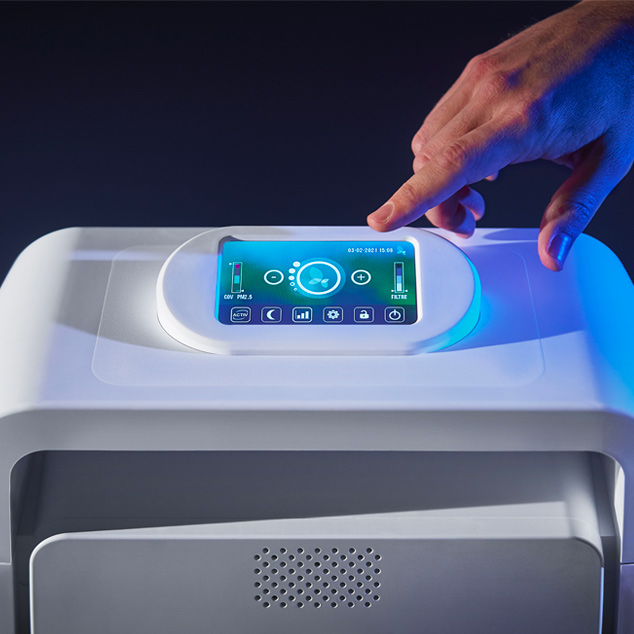
- Includes the Air Coach Pro: real-time monitoring, visual alerts, remote monitoring, and data tracking for your DUERP.
- NatéoSanté Proactive Maintenance: We monitor the condition of your equipment remotely. Your VET-certified filters and replacement UV-C lamps are automatically shipped to you before they become saturated. You don’t have to do a thing.
- Full warranty: includes damage and theft coverage, after-sales service, and return to the repair shop.
Start your assessment
NatéoSanté: 15 years of expertise in indoor air quality (IAQ)
Over the past 15 years, NatéoSanté built the largest industry-specific QAI database in France. This unique industry expertise, combined with our AI-powered analysis engine, enables us to provide recommendations of unmatched accuracy for the veterinary sector.
Our Core Values and Key Figures
- 2009: The year the company was founded in Saint-Hilaire-de-Chaléons (Loire-Atlantique).
- 100% French: The Air Coach and Eolis Air Manager are designed and manufactured in France, ensuring rigorous quality control and certified performance.
- 15 years of data: a unique historical record of IAQ data by industry sector, allowing you to compare your measurements to thousands of similar assessments.
- Patents & Innovation: We hold several patents on our measurement and processing technologies, driven by ongoing R&D.
- Global reach: recognized expertise and equipment exported to more than 50 countries.
Frequently Asked Questions: Audits and Air Quality in Hair Salons
What pollutants are measured in a hair salon?
Do keratin straightening treatments really contain formaldehyde?
Why choose EOLIS over a standard air purifier?
Does this analysis apply to nail salons?

101 Gustave Eiffel Street
44680 SAINT-HILAIRE-DE-CHALEONS
France
Hours
Monday through Friday
9:00 AM – 1:00 PM
2:00 PM – 5:00 PM