
Air Quality in Dental Laboratories: What Are the Risks for Dental Technicians, and How Can They Protect Themselves?
In dental laboratories, indoor air quality remains one of the most underestimated occupational hazards in the healthcare sector.
Yet dental technicians are exposed every day to a mix of pollutants:
- fine particles from grinding,
- chemical vapors released by the resins,
- metal dust generated during the manufacture of crowns and bridges.
Each stage of the manufacturing process releases specific substances, the nature of which varies depending on the materials used (acrylic resins, metal alloys, ceramics) and the processes employed (polishing, polymerization, firing).
Without proper air purification and ventilation systems, the accumulation of these pollutants can lead to serious and irreversible occupational diseases.
We take a look at the real risks and the solutions currently available.
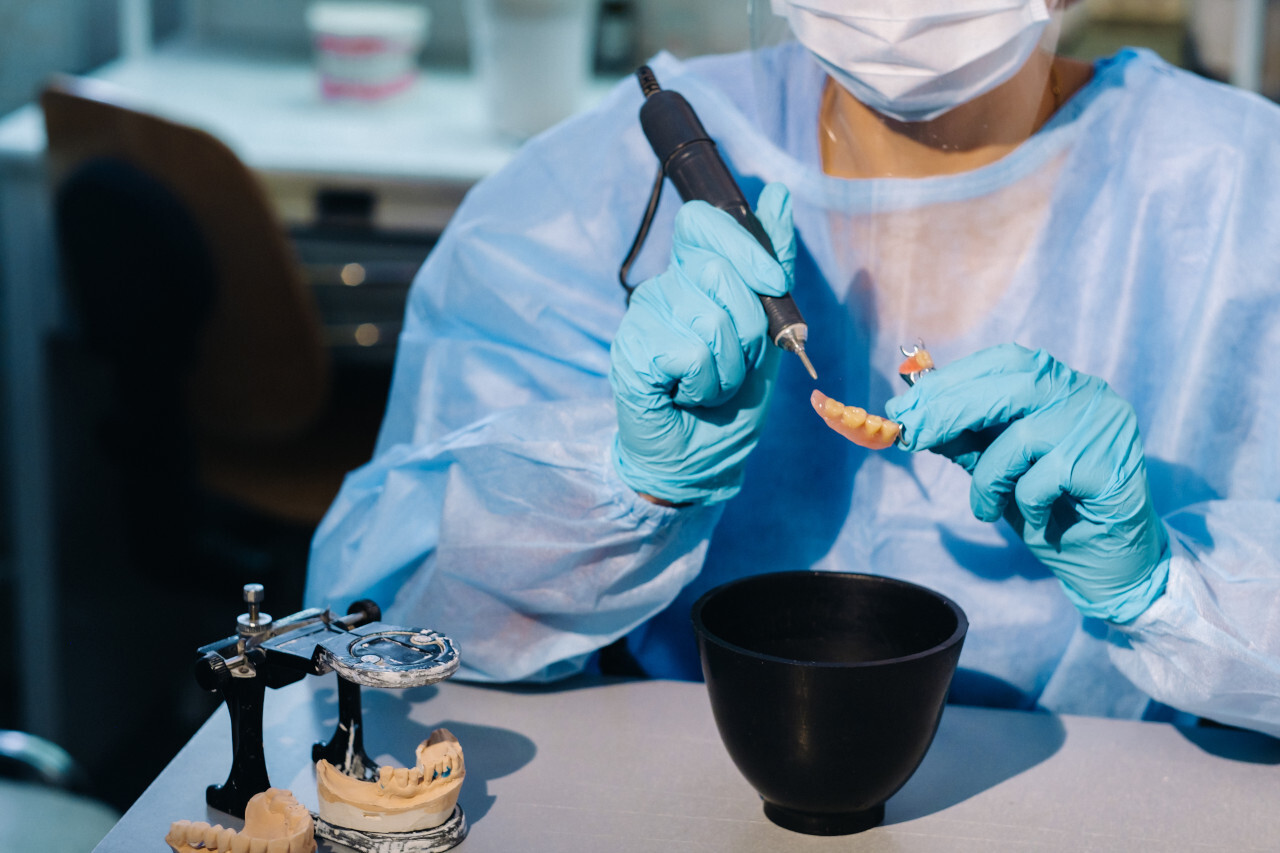
Air Quality Hazards in Dental Laboratories
The work of dental technicians involves the use of various products and processes that can pollute the air in the workplace. Among the most common pollutants are:
- Fine particles: generated during the polishing, grinding, or cutting of dental prostheses, they can penetrate deep into the respiratory tract and cause lung disease.
- Chemical fumes: Substances such as methyl methacrylate (MMA), found in acrylic resins, can cause irritation of the eyes, nose, and throat, and, over the long term, respiratory problems and more serious illnesses.
- metal dust: used in the manufacture of dental crowns and bridges, it may contain cobalt, nickel, or chromium—substances known for their allergenic and toxic effects.
Inhaling these dust particles or vapors can lead to occupational diseases such as asthma, respiratory allergies, silicosis, or chronic lung conditions. (National Institute for Research and Safety – INRS)

Classification of pollutants based on activities in the dental laboratory
Each stage of the dental prosthesis manufacturing process exposes the prosthodontist to various types of pollutants generated by the products and work processes.
Here is an overview of the main pollutants associated with the different activities carried out in a dental prosthesis laboratory.
Preparation and curing of acrylic resins
- Main pollutants: methyl methacrylate (MMA), formaldehyde, acetone, toluene.
- Associated risks: These volatile organic compounds (VOCs) are released during the handling and curing of resins used in the manufacture of removable dentures and inlay cores. Methyl methacrylate, one of the most commonly used, is known for its irritating effects on the eyes, skin, and respiratory tract. It can also cause allergic reactions and chronic respiratory conditions with prolonged exposure.
Grinding and polishing of dental prostheses
- Main pollutants: fine and ultrafine particles (PM10, PM2.5), crystalline silica, cobalt, nickel, chromium.
- Associated risks: Grinding, cutting, or polishing prosthetic components generates large amounts of fine and ultrafine dust, particularly when working with metal alloys. Crystalline silica, found in certain abrasive materials, is particularly hazardous. Inhaling this dust can lead to serious respiratory diseases such as silicosis, an incurable lung condition, or cancers of the respiratory tract. Furthermore, cobalt, nickel, and chromium—metals commonly used in dental alloys—are classified as carcinogens and are known to cause lung disease and allergic skin sensitization.
Firing and Processing of Dental Ceramics
- Main pollutants: zirconium oxide, aluminum oxide, carbon monoxide (CO), and nitrogen oxides (NOx).
- Associated risks: When firing ceramic crowns and bridges, fumes and fine particles are released into the air. Zirconium oxide, which is used in the manufacture of ceramic prosthetics, generates fine dust during the polishing and grinding stages. These particles can irritate the respiratory tract and cause chronic respiratory conditions. Additionally, high-temperature firing in dental furnaces releases carbon monoxide and nitrogen oxides, which are known for their harmful effects on the cardiovascular and respiratory systems.
Working with metal alloys for the fabrication of crowns and bridges
- Main pollutants: metal dust, lead, cadmium, mercury.
- Associated risks: When casting and grinding metal alloys, dental technicians are exposed to fine metal dust that often contains lead, cadmium, or mercury. These substances are highly toxic and can cause neurological disorders, kidney disease, and cancer. Chronic exposure to lead, for example, is linked to nervous system disorders and can affect cognitive development.
Cleaning and Disinfection of Prosthetics and Instruments
- Main pollutants: disinfectants containing glutaraldehyde, sodium hypochlorite, and hydrogen peroxide.
- Associated risks: The use of these disinfectants can generate irritating vapors and cause acute and chronic respiratory conditions, such as occupational asthma. Glutaraldehyde, in particular, is known to be highly irritating and sensitizing. Handling it without proper protection can cause severe allergic reactions and long-term respiratory problems.
Occupational diseases related to air quality
Poor air quality in dental laboratories is a major cause of occupational illnesses.
According to INRS statistics, respiratory diseases account for a significant proportion of reported illnesses in this sector. Among the most common conditions are the following.
Chronic respiratory diseases
Prolonged inhalation of fine particles, whether metallic or silica-based, contributes to the development of respiratory conditions such as chronic bronchitis, COPD (chronic obstructive pulmonary disease), and even cancers of the respiratory tract.
The INRS reports that bronchopulmonary conditions linked to the inhalation of mineral dust (such as silica) are particularly common among workers exposed in laboratories.
In France, COPD is the third leading cause of death, and its link to occupational exposure is increasingly well-documented.
Occupational allergies and asthma
Chemical compounds found in resins, metals, and disinfectants can cause severe allergic reactions.
Occupational asthma, a condition increasingly diagnosed in the industry, is often caused by repeated exposure to VOCs or irritating dust.
Occupational skin diseases
Direct contact with or inhalation of chemicals used in acrylic resins can cause contact dermatitis or chronic eczema, which can be particularly troublesome for dental technicians.
Occupational cancers
Certain substances found in dental laboratories, such as nickel and chromium, are classified as carcinogens by the International Agency for Research on Cancer (IARC).
Prolonged exposure to these metals may increase the risk of respiratory tract cancer.
Alarming figures
Studies conducted by the French Agency for Food, Environmental and Occupational Health & Safety (ANSES) reveal that 15% of occupational illnesses in France are caused by exposure to toxic substances.
In the dental prosthetics sector, the INRS estimates that nearly 70% of dental technicians are exposed to risks related to indoor air quality—a figure that has remained stable despite regulatory advances, underscoring the urgent need for proactive prevention.
Added to this is an evolving regulatory landscape: since 2023, the Occupational Health Plan 4 (PST4) has strengthened employers’ obligations regarding chemical risk assessment, including in small facilities such as dental laboratories.
Inspections by the INRS and CARSAT show that the majority of laboratories do not yet have a real-time air quality monitoring system in place.
Furthermore, airborne particles in dental laboratories are often smaller than 10 microns (PM10) or even 2.5 microns (PM2.5), which makes them particularly dangerous: they penetrate deep into the alveoli and can remain there for years, causing chronic inflammation.
How can we practically improve air quality in a dental laboratory?
What regulatory standard or threshold applies to air quality in a dental laboratory?
An air quality audit allows for the measurement of actual concentrations and verification of compliance.
Is an air purifier alone enough?
It does not replace localized ventilation at the workstation (exhaust ventilation at the source), which remains the technical priority.
Combining the two systems is the most effective strategy.
How often should the air quality in a dental laboratory be tested?
Continuous monitoring sensors now enable round-the-clock monitoring without external intervention.
You might also be interested in

Podiatrists: Occupational Risks Related to Indoor Air Quality and Prevention Strategies
VOCs, fine particulate matter, aerosols: What are the real risks associated with air quality in podiatry clinics, and how can they be assessed?

Air Quality and Athletic Performance: What We Can Learn from Elite Athletes
Olympic sailing champions have tested it: air quality directly affects performance. And this applies to you, too. Find out how.
How can you protect yourself against airborne transmission of the COVID-19 virus?
In a statement published on July 13, 2020, on the United Nations website, the World Health Organization (WHO) confirmed “the risk of airborne transmission of the virus.” This announcement came after 200 scientists sounded the alarm. “We acknowledge that evidence is emerging in this area, as in other areas […]
Improving indoor air quality in elementary, middle, and high schools using CO2 sensors and air purifiers
With its comprehensive range of services, NatéoSanté supports NatéoSanté in implementing solutions that not only help you comply with regulations regarding indoor air quality (IAQ) monitoring in public buildings but also effectively combat the spread of the coronavirus responsible for COVID-19. Ensure purified air and protection […]