
A national protocol to ensure the health and safety of employees in the workplace remains in effect in France due to COVID-19 health restrictions. Its latest version was published on December 30, 2021, amid the fifth wave driven by the Delta variant and risks further heightened by the highly contagious Omicron variant. Hygiene measures and physical distancing remain the standard. Wearing a mask is once again mandatory in enclosed spaces. Airing out and ventilation remain the basic rules for preventing the spread of the virus.
Given that transmission via aerosols remains a possibility, a professional air purifier equipped with HEPA filters—such as the EOLIS Air Manager—complements the three-pronged approach of “airing out, ventilating, and purifying.” It continues to serve as a reassuring health measure and a valuable HR asset for employees. Whether you are a leader of a microbusiness, SME, mid-sized company, or large corporation; a mayor; a local government executive; an HR director; or a chief administrative officer… NatéoSanté here to provide you with comprehensive support to ensure your indoor air is purified.
Updated January 3, 2021 – Previous version September 16, 2021
NatéoSanté offers a comprehensive overview of the situation by addressing six key questions regarding the reasons for purchasing a professional air purifier for your business or commercial premises, looking ahead to 2022.
 Continuing operations in open-plan offices requires compliance with the national COVID-19 protocol
On what scientific recommendations is the national COVID-19 protocol—which has been in effect in French companies since December 8—based?
A national protocol to ensure the health and safety of employees in the workplace during the COVID-19 pandemic is in effect in France and is regularly updated. The latest version was published on December 30, 2021. It follows several previous versions issued since the end of the first lockdown in May 2020 and is regularly updated in line with changes in the health situation in France.
The measures adopted in the summer of 2020 were based on two recommendations from the High Council for Public Health. The first of these, dated July 23, 2020, was released on August 14. The report, titled “SARS-CoV-2: Update on Knowledge Regarding Virus Transmission via Aerosols,” referenced the open letter dated July 4 sent by 239 scientists from 32 countries to the World Health Organization on the same topic.
The WHO had, in fact, included a specific answer in its online FAQ section regarding the possible transmission of the coronavirus via these aerosols. Scientists also referred to the concept of airborne transmission, which is a synonym.
The HCSP’s second opinion, which was taken into account by the French authorities, was issued on August 20, 2020. It concerned“recommendations regarding the wearing of masks in enclosed public spaces.”
This issue of a third route of COVID-19 transmission via aerosols, in addition to fomites (for example, a contaminated object… hence the importance of washing hands regularly and using hand sanitizer) and droplets (social distancing and protective measures), is driving research communities with contributions and publications that have now established it as a recognized critical mode of virus transmission.
 Risk of SARS-CoV-2 transmission via aerosols, the appropriate use of masks, and protection
of healthcare workers from COVID-19
© photo creative commons
In an article published on September 2, 2021, the daily newspaper Le Monde discusses the “slow response to the threat posed by aerosols.” While the scientific community has not yet reached a consensus on the hierarchy of risks due to a lack of sufficient studies, airborne transmission (the spread of the virus via air currents over long distances, i.e., beyond two meters) is the focus of intense attention. This is especially true as the Delta variant proves to be more infectious and dangerous.
What are the general provisions of this national protocol that apply within companies?
The version effective as of early December 2021 focuses on the following points:
- Procedures for implementing protective measures within the company through social dialogue
- Measures to protect employees
- Employee protection measures
- Screening tests
- Vaccination
- Health Pass
The protocol states that “in accordance with the general principles of prevention regarding occupational health and safety, the continuation of operations in companies and establishments must prioritize the following:
- Assessing the risks of exposure to the virus
- Implement preventive measures aimed at eliminating risks at their source
- Minimize exposures that cannot be eliminated
- Prioritize collective protective measures
- "To implement measures to protect employees in accordance with the guidelines set forth in this protocol."
Telework is not mandatory, and effective implementation of it must be the result of social dialogue, but it has been strongly recommended by Minister Elisabeth Borne.
The issue of air quality is primarily addressed through ventilation. This “should preferably be provided naturally: by keeping doors and/or windows open at all times, or, failing that, for at least 5 minutes every hour,” or through “a mechanical ventilation system that complies with regulations, is in good working order, and has been inspected to ensure an adequate supply of fresh air.”
The measurement of CO2 levels in an office, a meeting room, etc., has been redefined. The assessment of whether or not the 800 ppm threshold has been exceeded should be considered “in areas with significant foot traffic and during periods of high traffic, particularly when natural ventilation guidelines cannot be followed.” This is currently a recommendation and not a requirement.
What role can an EOLIS Air Manager indoor air purifier play in a workplace setting during the COVID-19 pandemic?
The restrictions imposed by the current health situation bring attention back to the critical issue of the potential spread of the coronavirus outdoors, as well as to the importance of air purification and indoor air quality.
In this regard, the specific use of a professional or medical-grade HEPA air purifier, such as the Made in France EOLIS Air Manager model , developed by NatéoSanté, rather than purchasing a simple consumer model, should be considered as an additional measure to ensure health and HR safety.
A selling point for a company, a local government, or an organization… demonstrating its commitment to doing everything possible to protect its employees from the potential risk of airborne virus transmission. Plus, it offers additional protection against all forms of airborne pollutants, pollen… and even unpleasant odors.
How does EOLIS Air Manager effectively reduce the spread of airborne viruses?
The effectiveness of professional air purifiers NatéoSanté stems from a unique combination of technologies. Specifically, for the EOLIS Air Manager, they combine:
- A virucidal and biocidal prefilter certified to ISO 18184:2019 and NF G39-011
- A medical-grade HEPA filter certified to EN1822-4, with an efficiency of up to 99.6% against coronaviruses measuring ~120–150 nm, such as COVID-19. Each filter is manufactured in France. It comes with a unique certificate indicating its airtightness rating. It is manually inspected and numbered for traceability by NatéoSanté.
Additionally, thanks to a patented feature, the air purifier measures and displays the filter’s actual wear in real time to ensure optimal filtration. - OSRAM PURITEC® HNS® germicidal UV-C lamps. These lamps are used in hospitals. They ensure consistent performance throughout their entire service life.
- The exclusive Controlled Active Oxygen technology (on the EOLIS Air Manager 600S and 1200S) complements the filtration system to enhance its virucidal effect
What are the expected benefits for the company and its employees of investing in one or more professional air purifiers?
During an economic recovery, for businesses of all sizes—from micro-enterprises to large corporations, including small and medium-sized enterprises (SMEs) and mid-sized companies—as well as municipalities and local governments, investing in one or more professional air purifiers is a long-term investment that:
- Reduce the impact of fears about virus transmission in the workplace to limit absenteeism; adjust remote work arrangements, which can lead to employee isolation or affect productivity and creativity—qualities fostered by interaction and group work…
- Reduce employees' fear of potentially bringing the virus home…
- From an HR perspective, on the employer side, addressing these concerns and taking care to reassure employees and mitigate risks by all means necessary—including making the right investments to reduce staff exposure—is a further demonstration of consideration in an era when employee well-being and corporate social responsibility are, quite rightly, key drivers of employer branding
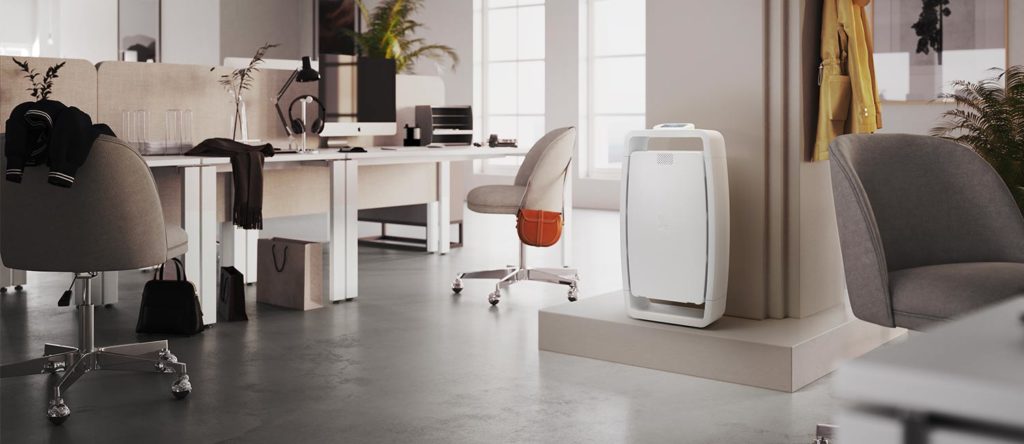 The EOLIS Air Manager Professional Air Purifier: Peace of mind regarding health and safety and a valuable asset for HR in offices and shared spaces
How NatéoSanté able to support any professional organization in ensuring business continuity?
Drawing on its experience and expertise, NatéoSanté supports NatéoSanté in:
- Developing a customized business continuity plan to safeguard both the company’s operations and the safety of its employees
- Implementing best practices to reassure all employees about their return-to-work conditions and the additional protection provided by air purifiers
The added value NatéoSanté : supporting executives, HR directors, department heads in the private or public sector, chief administrative officers, mayors, and others in the development and implementation of a return-to-work program, with a focus on employee prevention and protecting management from social risks.
You might also be interested in

Air Quality and Athletic Performance: What We Can Learn from Elite Athletes
Olympic sailing champions have tested it: air quality directly affects performance. And this applies to you, too. Find out how.
Improving indoor air quality in elementary, middle, and high schools using CO2 sensors and air purifiers
With its comprehensive range of services, NatéoSanté supports NatéoSanté in implementing solutions that not only help you comply with regulations regarding indoor air quality (IAQ) monitoring in public buildings but also effectively combat the spread of the coronavirus responsible for COVID-19. Ensure purified air and protection […]

Indoor Air Quality in 2026: Health, Environment, and Regulations—Where Do We Stand?
European Directive 2024/2881, IAQ requirements in public buildings starting in 2025: What is the state of indoor air quality in France in 2026, and what measures should be taken?
Why is it important to monitor air quality in hotels?
Last updated: March 25, 2022 Sleep quality, guest experience, and reassurance regarding health and safety for both staff and guests… Although there are currently no regulations in this area, the benefits of good indoor air quality (IAQ) in the hotel industry are numerous. Industry professionals have […]