
Indoor Air Quality in 2026: Health, Environment, and Regulations—Where Do We Stand?
In summary
Air pollution, both outdoor and indoor, is responsible for at least 6.7 million premature deaths worldwide each year (WHO 2024).
In France, nearly 40,000 deaths per year are attributable to exposure to PM2.5 fine particulate matter.
New European Directive EU 2024/2881: Effective December 11, 2024, the regulatory thresholds for PM2.5 and NO2 will be halved by 2030. France has until December 11, 2026, to implement this directive.
Indoor Air Quality (IAQ) Requirements for Healthcare and Social Care Facilities: As of January 1, 2025, healthcare and social care facilities are subject to regulatory monitoring of indoor air quality (annual CO2 measurements, self-assessment every four years, and an action plan).
The health costs of indoor air pollution are estimated at nearly 19 to 20 billion euros per year in France (ANSES).
Indoor air quality (IAQ) is now part of the “One Health” approach, which links human health, animal health, and the state of the environment.
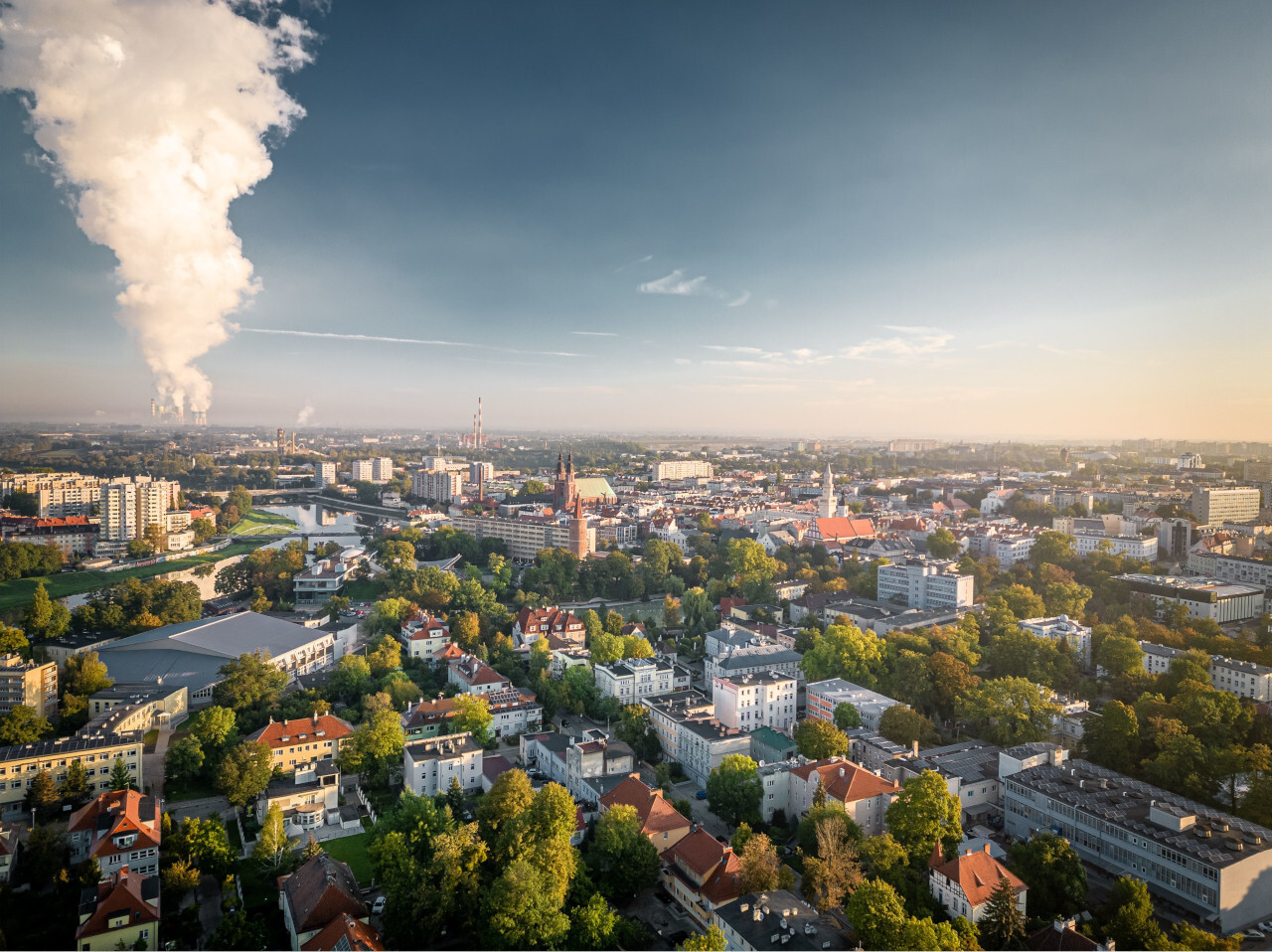
The quality of the air we breathe, both outdoors and indoors, has become a major public health issue. In France, we spend an average of 80% of our time in enclosed spaces: homes, offices, schools, and healthcare facilities.
Indoor air quality (IAQ) is often two to five times more polluted than outdoor air, due to the concentration of pollutants from building materials, household products, and human activities.
By 2026, two major trends will be shaping this field: a significantly strengthened European and national regulatory framework, and an increasingly systemic scientific approach that links air quality, human health, and climate issues.

A Mixed Picture in 2024: Real Progress, Persistent Challenges
The 2024 annual report on outdoor air quality in France, published by the SDES (the ministry responsible for the environment) in collaboration with INERIS and LCSQA, paints a mixed picture.
This report confirms that air quality is improving overall, in line with the reduction in pollutant emissions. However, even though pollutant levels are falling, regulatory limits continue to be exceeded in certain areas.
Specifically, of the twelve pollutants subject to regulatory standards, four exceeded limits in 2024: NO₂ and PM₁₀ (limit values), and O₃ and Ni (target values). The good news is that, for NO₂, both the extent of the exceedances and the number of people exposed have decreased dramatically since 2018.
This progress is largely due to mobility policies and the decarbonization of industry. However, it should not obscure the challenges ahead: the new, much stricter European standards will change the landscape.
The new European Directive 2024/2881: a major regulatory milestone
The new Air Quality Directive was published in the Official Journal of the European Union and entered into force on December 11, 2024. It marks a paradigm shift: it consolidates two directives from 2004 and 2008 and sets significantly more ambitious targets for 2030.
The new limits to be met by January 1, 2030, are particularly significant. For the two pollutants with the greatest impact on human health, the annual limit value for PM2.5 is being reduced from 25 µg/m³ to 10 µg/m³, and that for NO₂ from 40 µg/m³ to 20 µg/m³—a reduction by half in both cases.
Member States have two years to transpose this text into national law, by December 11, 2026, at the latest. For France, this will require substantial efforts: the Paris and Lyon metropolitan areas still regularly exceed current NO₂ limits, and the transition to the new standards will inevitably increase the number of areas where limits are exceeded.
The directive also introduces a requirement to monitor emerging pollutants that were previously subject to little regulation: ultrafine particles (UFPs) and soot carbon—a key indicator of combustion-related pollution—are now subject to enhanced monitoring requirements.
What this means in practice
This directive primarily concerns outdoor air, but its effects inevitably extend to indoor air: a better-ventilated building with outdoor air that contains fewer pollutants automatically improves indoor air quality.
It also sends a strong signal to local authorities, businesses, and facility managers: regulatory tolerance for air pollution will decrease significantly in the coming years.
Indoor Air Quality in Public Buildings: New Requirements Now in Effect
A program expanded as of January 1, 2025
In parallel with European regulations on outdoor air quality, France’s framework for monitoring indoor air quality (IAQ) in public buildings has been strengthened.
The new monitoring system is based on an annual assessment of ventilation systems, including direct-reading CO2 measurements; an IAQ self-assessment at least every four years; a campaign of continuous pollutant measurements at certain key stages in the building’s life cycle; and an action plan.
This measure took effect on January 1, 2025, for healthcare and medical-social facilities, joining daycare centers, elementary schools, middle schools, and high schools, which have been subject to this requirement since January 2023.
This now applies to: hospitals and long-term care facilities, nursing homes (EHPAD), and medical-social institutions, as well as juvenile detention centers.
Why CO2 measurement is critical
Carbon dioxide (CO2) is used as a proxy indicator of air exchange. A level above 800 ppm indicates insufficient air exchange, and above 1,500 ppm, immediate corrective action is required. It is scientifically established that an increase in CO2 concentration is associated with a decline in the cognitive performance of the occupants of the premises. In a healthcare facility or a classroom, this effect is particularly concerning.
Measuring CO2 does not replace comprehensive monitoring of pollutants—such as formaldehyde, benzene, and fine particulate matter—but it serves as a simple, cost-effective, and continuous indicator of overall indoor air quality.
A systemic approach: “One Health”
Air quality is now part of a broader conceptual framework promoted by French and international institutions: the “One Health” approach. It recognizes that human health, animal health, and the state of ecosystems are inextricably linked.
In this view, air pollution is no longer merely an isolated public health issue: it is both a consequence of the economic development model and a factor exacerbating climate change.
Reducing air pollutant emissions yields a twofold benefit: fewer premature deaths in the short term, and a contribution to climate stabilization in the long term.
In France, the cost of air pollution is estimated at 1,000 euros per person per year, taking into account the costs of medical care and hospitalizations, lost workdays, and lost production.
This systemic approach is also reflected in the 4th National Health and Environment Plan (PNSE 4, 2021–2025), which identifies indoor air quality as a cross-cutting priority—and whose revision for 2026–2030 is expected in the coming months.
A report submitted in April 2025 recommends creating an air quality index to be included in the technical diagnostic report (DDT) for housing, based on a standardized assessment of ventilation and materials.

Indoor pollutants: an underestimated risk in everyday buildings
While regulations are advancing in public buildings, the situation in ordinary buildings—residences, offices, and retail spaces—remains largely unregulated. Yet the sources of indoor air pollution are numerous and often invisible.
Volatile organic compounds (VOCs)
They are emitted by paints, varnishes, adhesives, cleaning products, and furniture. Some are classified as carcinogens (benzene, formaldehyde). Their concentration indoors is consistently higher than outdoors.
PM2.5 and PM10 fine particulate matter
They penetrate deep into the respiratory tract. They come from external sources (traffic, industry) as well as internal ones: cooking, candles, printers, and, in certain work environments, technical activities such as sanding.
Mold
They thrive in conditions of excessive humidity and poor ventilation. They can cause respiratory allergies and asthma, particularly in children and people with weakened immune systems.
Radon, a naturally occurring radioactive gas
Found in certain geological regions, it is the second leading cause of lung cancer after tobacco, according to the Ministry of Health.
The health costs of indoor air pollution are estimated at 19 billion euros per year in France, according to a joint study by ANSES, OQAI, and the University of Paris I.
Toward a New Culture of Indoor Air Quality
Indoor air quality has long been viewed as a secondary concern, or even overlooked in standard building maintenance practices. Today, regulations and health data point to a clear direction: air hygiene is set to become just as central as surface hygiene or food safety.
Several complementary approaches can be taken to address this:
- Air circulation and ventilation remain a priority: open windows several times a day, perform regular maintenance on mechanical ventilation systems (MVV), and use CO2 sensors as warning indicators.
- Choosing materials and products: Opt for paints, adhesives, and coatings with low VOC emissions, especially during renovations.
- Air purification using HEPA filtration and activated carbon effectively complements ventilation systems, particularly in environments with high concentrations of pollutants (medical offices, treatment rooms, workshops) or for vulnerable populations (the elderly, young children, and immunocompromised individuals).
- Continuous monitoring of key indicators—such as CO₂, fine particulate matter, and VOCs—enables an objective assessment of air quality and allows for timely corrective action, rather than reacting to symptoms that have already developed.
By 2026, outdoor and indoor air quality will have emerged as a major public health, environmental, and economic issue. The new European Directive 2024/2881, which is expected to be transposed into French law by the end of 2026, will profoundly reshape obligations and practices.
At the same time, the extension of the regulatory monitoring system to healthcare and medical-social facilities since January 2025 marks an important step in addressing IAQ in the most sensitive settings.
Measuring, ventilating, and purifying: these three steps form the backbone of a comprehensive approach to indoor air quality. No longer viewed as a regulatory requirement, but rather as an investment in health—for building occupants and the community alike.
Sources: SDES/Ministry of Ecological Transition (2024 Indoor Air Quality Report), LCSQA/Ineris, EU Directive 2024/2881, Ministry of Health (Indoor Air Quality Monitoring in Public Buildings), Cerema (Indoor Air Quality Guide for Public Buildings, February 2025), ANSES, OQAI, WHO, COVARS, Atmo France.
You might also be interested in

Healthcare-associated infections and air quality: Which hospital departments will be most at risk in 2026?
Which hospital departments are most at risk of healthcare-associated infections? Data for 2024–2025, antibiotic resistance, air quality, and HEPA filtration.

Air Quality in Dental Laboratories: What Are the Risks for Dental Technicians, and How Can They Protect Themselves?
Metal dust, silica, resins, chemical fumes… Dental technicians are among the professionals most exposed to indoor air pollution. Learn about the real risks, the latest data for 2025–2026, and practical air purification solutions to protect your laboratory.
Improving indoor air quality in elementary, middle, and high schools using CO2 sensors and air purifiers
With its comprehensive range of services, NatéoSanté supports NatéoSanté in implementing solutions that not only help you comply with regulations regarding indoor air quality (IAQ) monitoring in public buildings but also effectively combat the spread of the coronavirus responsible for COVID-19. Ensure purified air and protection […]
Air Quality in the Workplace: The Intersection of Public Health, Productivity, and Quality of Life at Work
Can indoor air quality be linked to quality of life at work? Yes… if we start from the premise that air is life, and that attention to health in the workplace is one of the components of quality of life at work. Measuring CO2 levels and fine particulate matter to anticipate, ventilate, and air out the space, […]