
Air Quality in Daycare Centers: Regulations, Measurement, and Solutions

For facility managers, the challenge is twofold: to meet indoor air quality (IAQ) monitoring requirements and to take concrete action when measurements indicate a need for improvement.
NatéoSanté offers a simple approach: use Air Coach to take measurements, centralize regulatory compliance tracking on a dedicated platform, and—when appropriate—supplement air circulation and ventilation with appropriate air purification.
Air Quality in Daycare Centers: What Do the Regulations Say?
Childcare facilities for children under 6 years of age are subject to regulatory oversight of indoor air quality. These requirements were strengthened by Decrees No. 2022-1689 and No. 2022-1690 of December 27, 2022, which took effect on January 1, 2023.
It is based, in particular, on four components:
- an annual assessment of ventilation systems that includes CO₂ monitoring;
- a self-assessment at least once every four years;
- measurement campaigns at certain key stages in the building's life cycle;
- an action plan to improve indoor air quality.
→ To find out which areas to inspect, the procedures for each step, and the CO₂ thresholds, see our article on monitoring indoor air quality in public buildings.
CO₂, bronchiolitis, flu, allergies: Why should we care about the air quality in a daycare center?
CO₂: An Indicator of Air Exchange
CO₂ is naturally released when we breathe. In an occupied room with insufficient air exchange, its concentration increases. Measuring it therefore makes it possible to identify situations where people are confined in a small space and to adjust ventilation practices accordingly.
Bronchiolitis, RSV, the flu, COVID-19: How Are They Related to Indoor Air Quality?
Bronchiolitis, which is frequently caused by respiratory syncytial virus (RSV), the flu, or COVID-19, is a respiratory infection that can be transmitted, in particular, through respiratory particles and aerosols emitted by an infected person.
In an enclosed communal space, air circulation and ventilation help to dilute and remove these aerosols. Properly sized air purification systems can complement these measures by reducing the concentration of airborne particles and aerosols. They do not eliminate the risk of transmission and are not a substitute for other preventive measures.
Pollen, Particles, and Allergies
Pollen, dust, and fine particles can also enter or become resuspended indoors. Proper filtration can help reduce their concentration in the air, particularly in spaces where children with allergies are present.
VOCs and formaldehyde
Furniture, floor and wall coverings, paints, adhesives, cleaning products, and certain activities can emit volatile organic compounds (VOCs). Monitoring these parameters helps identify unusual variations and pinpoint their sources.
In practical terms, what c NatéoSanté . offer your daycare center?
1. Easy Measurement with Air Coach
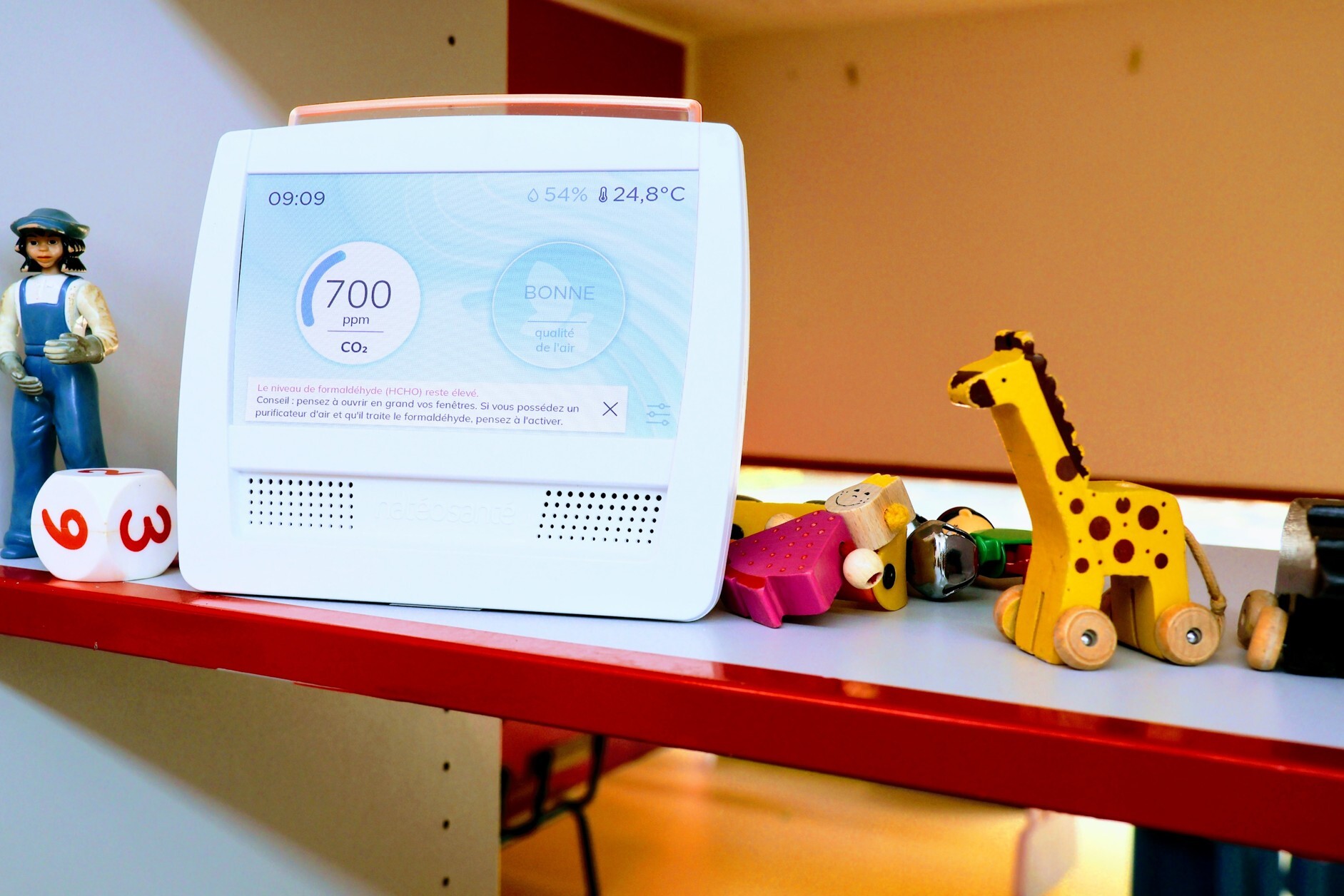
The Air Coach smart monitoring station tracks CO₂ as well as PM1, PM2.5, PM10, VOCs, formaldehyde, temperature, and humidity. It can be moved between the rooms selected for the annual assessment: there is no need to install a permanent device in every room.
2. Consolidate your obligations on a dedicated platform
The NatéoSanté ERP platform allows you to centralize—for each daycare center—the annual assessment of ventilation systems, CO₂ measurements, self-assessments, and action plans. This gives you a clear overview of deadlines, results, and actions taken.
3. Moving from Measurement to Action
The data is used to identify situations that require action: adjusting airflow, checking ventilation, modifying certain practices, or investigating a source of pollution. The historical data can then be used to track changes in the situation.
4. Purify the air when the need arises
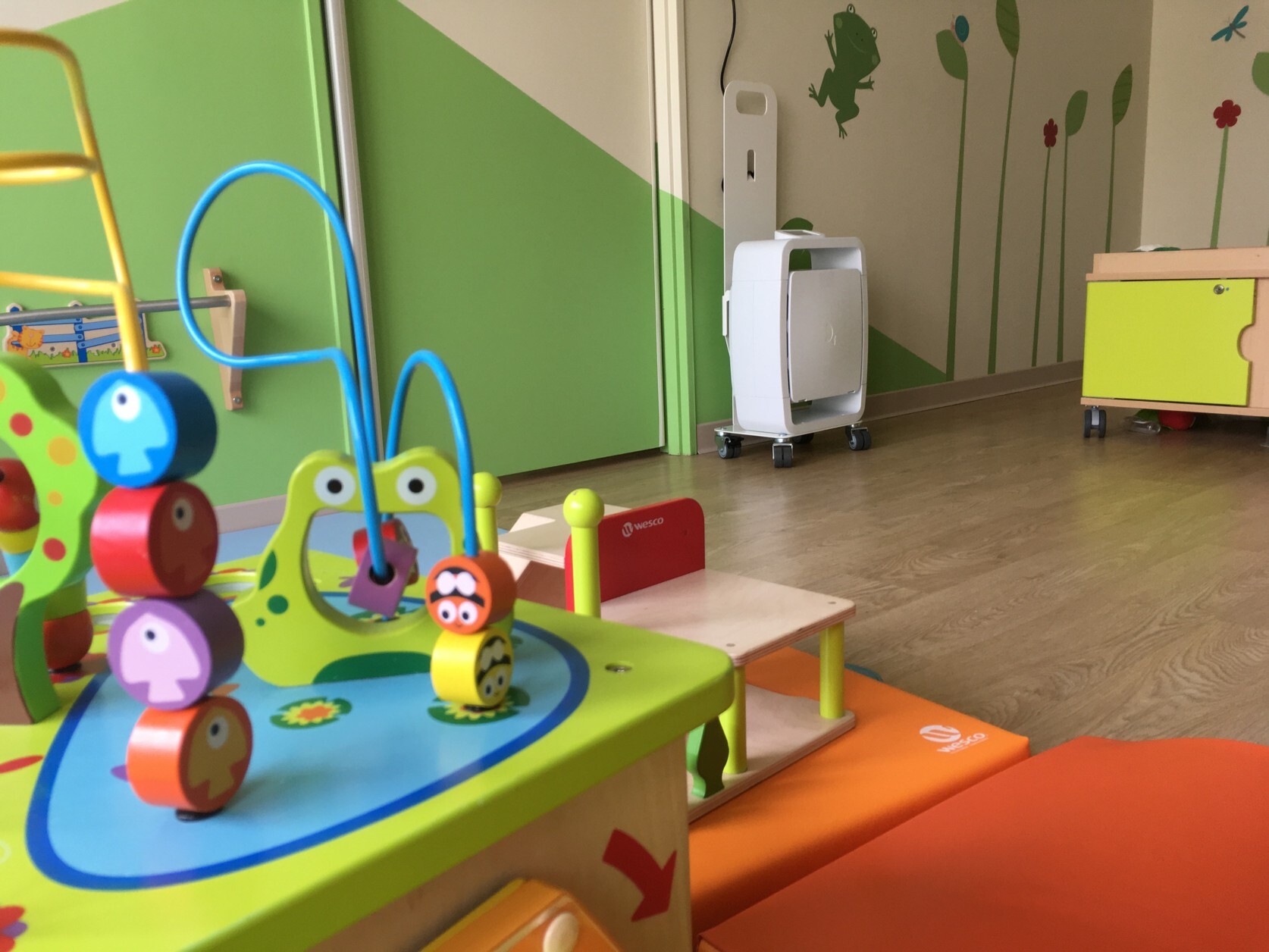
When the goal is to reduce fine particles, pollen, allergens, or airborne aerosols, NatéoSanté can offer an air purification solution tailored to the room’s volume, intended use, and specific requirements. Air purification is intended to complement air exchange and does not reduce CO₂ levels.
Managing one daycare center or multiple facilities: the same process
An independent daycare center may need a simple way to track its obligations and measures. A network of daycare centers or a local government must also maintain a consolidated view of multiple locations.
Air Coach and the ERP platform NatéoSanté make it possible to tailor the organization to the number of locations: track performance where needed, maintain a history, and monitor actions without creating a multitude of separate files and reports.
NatéoSanté provides support to early childhood education centers
NatéoSanté , a French specialist in indoor air quality since 2009, combines measurement, regulatory compliance, and solutions for improving air quality. The goal is to offer a customized approach tailored to your facility rather than a one-size-fits-all solution for all daycare centers.
Frequently Asked Questions
What are a daycare center’s obligations regarding air quality?
As a daycare center manager, you are required to implement the regulatory monitoring of indoor air quality at your facility. This includes, in particular, an annual assessment of ventilation systems with CO₂ measurements, a self-assessment every four years, measurements at certain key stages in the building’s life cycle, and an action plan. Read our dedicated article here.
Specifically, NatéoSanté can help you implement and track your CO₂ measurements using Air Coach, centralize your assessments and action plans within the ERP platform, and implement air quality improvement or purification solutions when appropriate.
Which regulation addresses air quality in daycare centers?
Is CO₂ monitoring mandatory in daycare centers?
Is a CO₂ sensor needed in every room?
Is an air purifier helpful for allergies?
Can an air purifier help limit the spread of bronchiolitis or the flu?

101 rue Gustave Eiffel
44680 SAINT-HILAIRE-DE-CHALEONS
France
Hours
Monday through Friday
9:00 a.m. – 1:00 p.m.
2:00 p.m. – 5:00 p.m.