
Air Quality in Elementary, Middle, and High Schools: Measurement, Management, and Solutions

For a local government or school facility manager, the issue goes beyond simply installing a sensor in a classroom: it involves organizing regulatory monitoring, comparing buildings, prioritizing actions, and balancing air quality, user comfort, and energy considerations.
NatéoSanté combines Air Coach, an ERP platform, and air purification solutions to move beyond a regulatory requirement and enable practical management of air quality across one or more facilities.
What are the regulations regarding air quality in elementary, middle, and high schools?
Elementary and secondary schools, vocational training institutions, and after-school programs are subject to the regulatory framework for monitoring indoor air quality. This framework was strengthened by Decrees No. 2022-1689 and No. 2022-1690 of December 27, 2022.
It includes, in particular:
- an annual assessment of ventilation systems, including CO₂ measurements;
- a self-assessment at least once every four years;
- measurement campaigns at certain key stages of construction;
- an action plan to improve air quality.
→ Find CO₂ thresholds, sampling rules, and measurement procedures in our article on indoor air quality monitoring in public buildings.
Why measure CO₂ in a classroom?
CO₂ is primarily produced by respiration. In a crowded classroom, changes in CO₂ levels can indicate whether air exchange is sufficient given the number of people in the room.
With Air Coach, it becomes possible to observe when a classroom begins to become stuffy, the effect of opening windows, and the differences between various rooms or buildings.
Air Coach also monitors PM1, PM2.5, and PM10, VOCs, formaldehyde, temperature, and humidity, providing a broader perspective than just CO₂.
Flu, COVID-19, pollen: What other challenges do schools face?
Influenza, COVID-19, and Other Respiratory Infections
A person with a respiratory infection can release particles and aerosols that may contain infectious agents when they breathe, speak, cough, or sneeze. Air exchange helps reduce their concentration in an occupied room.
Where appropriate, appropriate filtration can complement aeration and ventilation by reducing the concentration of airborne particles and aerosols. It does not replace air exchange or other preventive measures.
Pollen, Allergies, and Outdoor Pollution
Opening windows refreshes the air but can also allow pollen or particles from outside to enter. In some facilities, proximity to a major road, episodes of pollution, or seasonal allergies may therefore require monitoring both indoor and outdoor air quality simultaneously.
Air Quality and Energy: How Can We Avoid Treating These Issues Separately?
In a school, indoor air quality and energy efficiency are closely linked. Leaving windows open for long periods during the heating season can increase heat loss; conversely, excessively limiting air exchange to reduce energy consumption can promote the buildup of indoor air pollutants.
Monitoring CO₂ levels allows for more precise adjustment of ventilation to the actual needs of the space. Combined with data on temperature, humidity, and occupancy, this information can help facilities management teams:
- identify periods of lockdown;
- identify rooms that are operating abnormally;
- adjust ventilation practices;
- better coordinate land use, ventilation, and thermal comfort;
- identify buildings that require priority analysis or action.
For a local government, the benefit lies in gradually integrating air quality monitoring, technical operations, and energy efficiency rather than managing these areas separately.
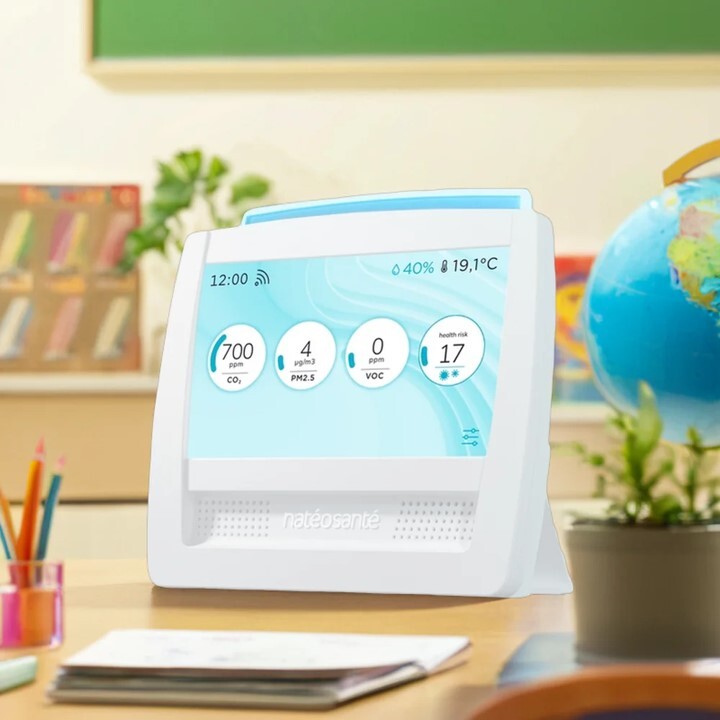
In practical terms, how does NatéoSanté help manage a school’s assets?
1. Organize the assessments without equipping every classroom
The regulations require random sampling of rooms. Air Coach can be moved between the relevant rooms, making it possible to establish a fleet of sensors tailored to the number of schools rather than systematically installing a device in every classroom.
2. Centralize the monitoring of all schools
The ERP platform NatéoSanté consolidates annual assessments, CO₂ measurements, self-assessments, and action plans. The manager maintains detailed information on each site while having a consolidated view of their portfolio.
3. Identify priority buildings
The measurement history makes it possible to compare different situations: classrooms that are regularly placed under lockdown, differences between buildings, episodes of particulate matter, or the effect of a new ventilation practice. This data helps guide investigations and actions.
4. Take action where necessary
Depending on the issues identified, measures may focus on air circulation, ventilation, usage patterns, or sources of pollution. Appropriate air purification can complement these efforts when it is necessary to reduce fine particles, pollen, allergens, or airborne aerosols.
When is air purification appropriate in a school?
An air purifier does not refresh the air or reduce CO₂ levels. It serves a different purpose: to reduce the concentration of certain pollutants in the air.
A properly sized air purification system may be considered, in particular, to reduce fine particles, pollen, allergens, and airborne aerosols, or when outdoor conditions make it more difficult to open windows.
NatéoSanté determines the appropriate solution based on the volume, the room's intended use, the required airflow, the noise level, and the targeted pollutants.
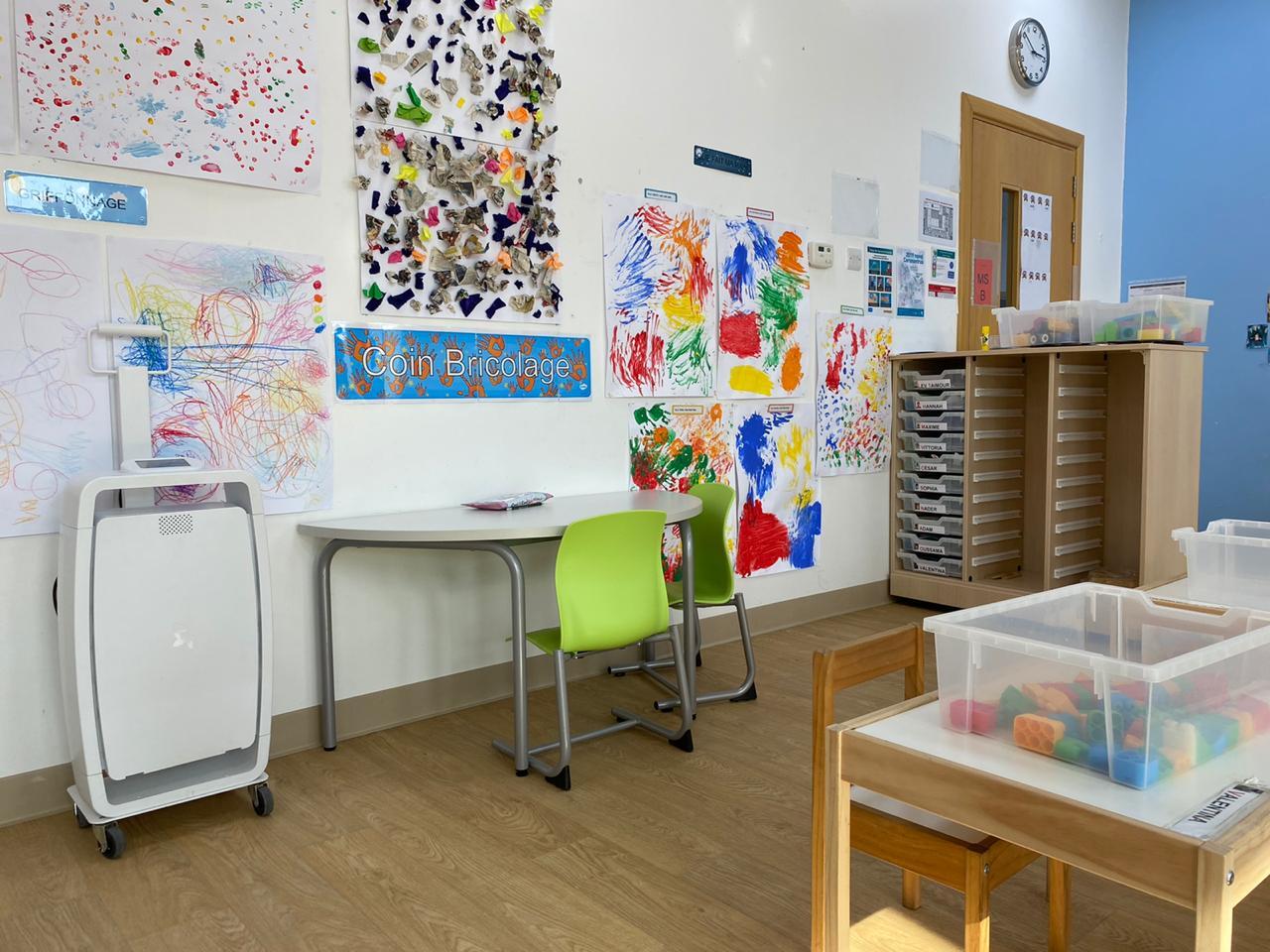
NatéoSanté : From Assessing to Managing Your Assets
NatéoSanté provides support to local governments and school administrators through a flexible approach: Air Coach for measurement, an ERP platform to centralize and track compliance requirements, guidance on how to analyze the data, and air purification solutions when the situation warrants it.
The goal is to tailor the organization and equipment to the existing infrastructure and the actual challenges encountered.
Frequently Asked Questions
What are a school's obligations regarding air quality?
Elementary, middle, and high schools are subject to regulatory oversight of indoor air quality. This includes, in particular, an annual assessment of ventilation systems with CO₂ measurements, a self-assessment at least once every four years, measurement campaigns at certain key stages in the building’s life cycle, and an action plan. Learn more by reading our dedicated article here.
NatéoSanté can help you coordinate this process with Air Coach for CO₂ measurements and a dedicated platform to centralize assessments, results, and action tracking, whether for a single facility or multiple buildings.
Which decree addresses air quality in schools?
Is CO₂ monitoring required in schools?
Should a CO₂ sensor be installed in every classroom?
Is an air purifier useful for allergies, winter illnesses, or spikes in pollution?
During a spike in outdoor pollution, air purification can also help reduce the amount of particulate matter entering buildings, especially when it is not advisable to keep windows open for extended periods.
Air purification is therefore a complementary solution to proper ventilation and air circulation, whether to limit exposure to pollen and fine particles or during periods of high circulation of respiratory viruses.
How can we balance classroom ventilation with energy savings?

101 rue Gustave Eiffel
44680 SAINT-HILAIRE-DE-CHALEONS
France
Hours
Monday through Friday
9:00 a.m. – 1:00 p.m.
2:00 p.m. – 5:00 p.m.