
What is an air purifier? Tips for choosing an air purifier, effects on the respiratory system
Air purifier reviews: a cure worse than the disease?
Indoor air purifiers (or air filters) filter the air in enclosed spaces and release purified air. Depending on their technical design and key features, they are intended either for the general public or for professional use.
They operate as a supplement to the necessary natural ventilation and air circulation, provided that it is possible to open the windows.
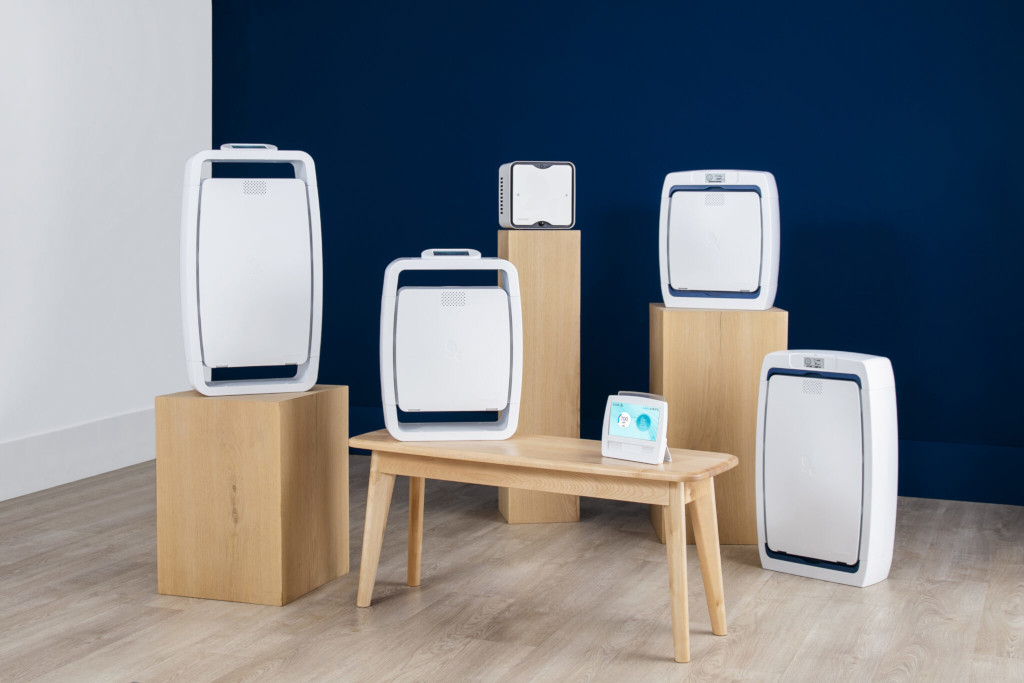
What is an air purifier?
An air purifier is a device designed to filter indoor air by trapping a variety of pollutants—such as particles, volatile organic compounds (VOCs), and allergens—removing them, and releasing purified air.
They play a vital role in improving indoor air quality (IAQ), particularly in environments where polluted air can affect respiratory health.
Whether at home or at work, air purifiers can help you breathe cleaner air and reduce the risk of respiratory illnesses, asthma, and allergies.
How does an air purifier work? What does it mean to purify the air?
Air purifiers draw in air from a room and pass it through several filters, including a HEPA filter, which can capture 99.97% of particles larger than 0.3 microns, including dust, allergens, viruses, and bacteria.
This filtration process removes pollutants from the air and ensures purified air.
NatéoSanté models, such as the EOLIS Air Manager, also feature activated carbon filters to neutralize VOCs and odors, as well as UV-C technology to destroy microorganisms (mold, bacteria, and viruses).
These technologies effectively purify indoor air and help improve respiratory health in offices, public buildings, and even home offices.
Air purifiers filter and purify indoor air by removing various sources of pollution and contamination.
Air purification occurs in several stages. First, the purifier draws in indoor air and removes particles from it. The air then passes through several filters that trap the various types of pollutants present in the air.
Depending on the air purifier's performance, the amount of air it can treat depends on the size of the room (bedroom, living room, dining room), office, shared space, or open space.
For optimal performance, it is essential to install one air purifier per room.

What are the purposes of an air purifier?
The main purpose of air purifiers is to protect respiratory health:
- reduce the spread of harmful residues, allergens, or viruses.
- prevent asthma and allergies (for example, in children, the elderly, and people with sensitivities).
Air purifiers—not to be confused with air ionizers or humidifiers—can be used in homes, enclosed offices, open spaces and workspaces, stores, beauty salons, hotels and restaurants, medical and paramedical facilities, etc., as well as in schools, hospitals, medical and paramedical facilities, institutions of higher education… and other preventive and curative measures.
Individuals and businesses looking to protect their health, as well as that of their families, friends, and employees, can use them, for example, when employees return to work or resume their activities.
In this sense, indoor air purifiers address current health and social challenges related to air quality. This applies to both PM2.5 particulate pollution and the risk of virus transmission via the air and aerosols.
Air purifiers are designed to protect respiratory health by filtering out indoor pollutants.
The main objectives are as follows:
- Reduce the spread of viruses and bacteria: HEPA filters and UV-C lamps effectively eliminate airborne pathogens.
- Reduce allergens: Pollen, dust, and other particles are trapped to help prevent asthma attacks and reduce allergies.
- improve indoor air quality in spaces such as offices, open areas, schools, hospitals, and stores.
By reducing the presence of airborne pollutants and VOCs, air purifiers allow people with asthma and allergies to breathe cleaner air, thereby contributing to a better quality of life.
What are the main features of a professional air purifier?
It is important to distinguish between a professional-grade air purifier and a general-purpose consumer model. They do not provide the same level of air treatment and do not offer the same overall performance, such as airflow or speed. They utilize different advanced technologies, and consumables—such as more expensive HEPA filters—can affect the price.
Professional air purifiers equipped with HEPA13 or HEPA14 filters are more effective against pollen and other allergens, PM2.5 and PM10 particles, VOCs (volatile organic compounds), formaldehyde, and airborne viruses and bacteria.
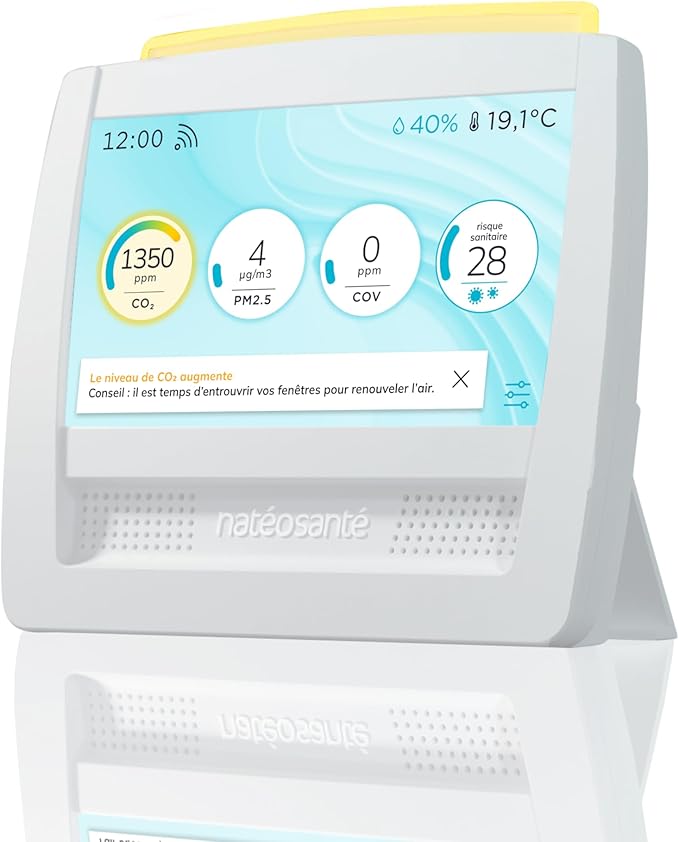
All this information can be measured in real time by NatéoSanté Air Coach indoor air quality sensor, which can also instantly inform you of what you can do to protect your respiratory health, based on the recorded and displayed values.
The indoor air quality display is available in three models: Air Coach CO2, Air Coach Pro, and Air Coach Pro Formaldehyde.
Finally, it is important to note that the device is non-toxic (safe), meaning that the indoor air purifier does not generate secondary pollutants on its own and does not release them into the ambient air.
Depending on the manufacturer, model, and series, as well as quality, certification, design, and the influence of the “Made in France” label…
And to evaluate the price relative to the proven performance of the air purification system, it is important to compare everything on an equal footing based on the available technical information.
Commercial air purifiers differ from consumer models in their ability to process larger volumes of air and capture smaller pollutants such as PM2.5 and PM10 particles, VOCs (volatile organic compounds), and formaldehyde.
Commercial air purifiers such as the EOLIS Air Manager from NatéoSanté designed to use HEPA (High Efficiency Particulate Air) technology.
These purifiers are designed to use HEPA 13 or 14 filters, or ULPA filters in certain situations, to remove pollutants from the air and quickly ensure healthy air.
These devices are essential in settings such as hospitals, offices, and schools, where indoor air quality is crucial for preventing the spread of viruses and other harmful contaminants.
Are there any specific regulations regarding indoor air quality?
Decree No. 2022-1689 of December 27, 2022, which took effect on January 1, 2023, stipulates that: “changes to the implementation of mandatory indoor air quality monitoring in certain establishments open to the public.”
The affected groups are:
- owners or operators of certain public or private establishments that are open to the public.
- accredited organizations that conduct indoor air quality measurements in certain public or private premises open to the public.
According to regulations, this monitoring of indoor air quality (IAQ) includes:
- the annual assessment of the building's ventilation system, including direct measurement of carbon dioxide (CO2) levels
- self-assessments of indoor air quality (IAQ) conducted at least every four years
- surveys to measure regulated pollutants conducted within 7 months of key milestones in the building’s lifecycle that could affect indoor air quality.
Based on the data collected in the previous steps, an action plan should be developed to improve indoor air quality.
Our Air Coach Pro Formaldehyde products (which measure and display indoor air quality: CO2 sensor, VOCs, fine particulate matter PM1, PM2.5, PM10, formaldehyde) and Air Protect, a professional air purifier for spaces up to 120 m², are 100% designed to meet the regulatory requirements for public buildings under this IAQ decree.
Frequently Asked Questions About Air Purifiers and Indoor Air Quality
How to Choose the Right Indoor Air Purifier?
Each air purifier has its own performance characteristics and technical specifications (filter-based, ion-based, photocatalytic, plasma-based, etc.).
Before purchasing an air purifier, you should compare the filtration levels of the various models available and take these factors into account when making your purchase.
In fact, your device’s effectiveness against air pollution (and odors) depends on how you use it and the model you choose. Asthma, allergies, fine particulate matter, odors…
For some, it serves as a preventive measure; for others, it simply enhances their quality of life, whether at work or at home, by ensuring healthy, purified air.
What is the role of the activated carbon filter?
The activated carbon filter is primarily used to eliminate unpleasant odors in a room. It is a filter containing activated carbon beads that filters out and removes toxic gases such as benzene, hydrogen sulfide, formaldehyde, ammonia vapors, bleach, and unpleasant odors…
The activated carbon filters used by NatéoSanté its air purifiers also help remove excess ozone from the air.
How does air filtration using oxidation and UV-C lamps work?
Pollutant particles are absorbed through an oxidation-reduction reaction between the catalyst and UV-C radiation.
This process converts VOCs into H₂O and CO₂. This feature can be turned on or off on our models.
Is a medical-grade HEPA filter effective against viruses?
The HEPA filter in a professional air purifier like the EOLIS Air Manager captures more than 99% of particles larger than 0.3 µm.
This filter is medical grade. It is also known as an absolute filter.
It consists of a layer of very fine fibers. Thanks to its tight weave, it traps dust mites, pollen, mold, fungi, pesticides, bacteria, viruses, fine dust, pet dander, and even diesel particles.
What is the Active Oxygen Generator used for?
Active oxygen provides deep purification of indoor air. This feature, which should be activated when you are not in the room or at your workplace, effectively eliminates deeply embedded odors (from sheets, fabrics, and carpets) and also treats the space to combat dust mites and mold.
This feature is available as an option on the EOLIS Air Manager professional indoor air purifier. It can also be enabled or disabled on our various models.
Why is it important to monitor the CO2 level in a room?
But sometimes, this isn’t possible or isn’t enough—whether it’s a public building such as a school, hospital, or nursing home, a business premises, a house, or an apartment. In that case, the air needs to be purified!
What are the latest developments at NatéoSanté the areas of indoor air quality (IAQ) measurement and indoor air purification?
It is primarily intended for public access buildings (PABs) that have been subject to the QAI decree since January 1, 2023. Like EOLIS Air Manager, Air Protect is also available in two sizes and models (600 and 1200) for rooms with a floor area of up to 60 m² or 120 m².
Where can an air purifier be used to improve indoor air quality?
In hospitals at the height of the pandemic, then in daycare centers, and now in offices to improve workplace well-being, air purifiers have proven their value and necessity.
NatéoSanté, a specialist in indoor air quality (IAQ) since 2009, has extensive experience and a deep understanding of how these devices have evolved, and has mastered the technology behind them.
Their primary function is to filter and purify the air. An air purifier can be used for both therapeutic and preventive purposes.
It is extremely helpful for people with respiratory conditions such as asthma or allergies, as well as for those who want to combat pollution or unpleasant odors.
Is an air purifier effective against coronaviruses and COVID-19?
This result was obtained and certified through tests conducted by an independent microbiology laboratory. The results were published in November 2020 by NatéoSanté.
They were conducted using a strain of human coronavirus (HCoV-229E) closely related to the SARS-CoV-2 strain responsible for the COVID-19 pandemic.
What has been the official stance on air purifiers in France since the onset of the COVID-19 pandemic?
The official stance on air purifiers has changed since spring 2020. Previously, a negative opinion from ANSES (the French Agency for Food, Environmental and Occupational Health & Safety) was cited.
In November 2020, a report by the INRS (National Institute for Research and Safety) and, in May 2021, a second report by the HCSP (High Council for Public Health) established the standard: only equipment equipped with a high-efficiency filter against airborne particles is considered effective.
It’s worth noting that, in the case of COVID-19, they will play a role in preventing potential transmission via aerosols, in addition to preventive measures such as social distancing and wearing masks…
This is especially true in enclosed spaces where ventilation is not possible. They can be paired with a CO2 sensor that acts as a confinement indicator and alerts occupants when the threshold of 0.08% is exceeded (see the HCSP’s recommendations on this subject).
You might also be interested in

Why measure CO2? What are dangerous CO2 levels in ppm? What is the maximum CO2 level in a room or in the air?
CO2 emissions into the atmosphere pose a major threat to the planet’s ecological balance, but excessive indoor exposure can also pose risks to human health. High CO2 concentrations can lead to symptoms such as headaches, fatigue, reduced concentration and cognitive function, and an increased incidence of respiratory infections.

Why isn't an air ionizer enough to purify indoor air?
If you’re thinking about buying an air purifier but aren’t sure whether to go with a full filtration system or a simple ionizer, this article will help you make up your mind!
Some common misconceptions about air pollution
1 – At least in my car, I’m protected from pollution… FALSE! It’s also worth noting that when driving behind a heavy-duty truck, the amount of particulate matter and nitrogen oxides increases fourfold. And although driving behind a diesel car equipped with a particulate filter does not increase the concentration of particulate matter in the […]

Sargassum in the Caribbean: Understanding the Dangers of Hydrogen Sulfide and Solutions for Better Air Quality
Despite their harmless appearance, these brown algae release a toxic gas: hydrogen sulfide, whose health effects are far from negligible.