
Veterinary Clinics: What Are the Risks to Staff and Animals Related to Indoor Air Quality?
These variations are often invisible and difficult to detect. A room may seem to be properly ventilated while still occasionally having high concentrations of certain pollutants.
What are the main pollutants to watch for? What risks might they pose to staff and animals? And how can we better control air quality in a veterinary clinic?
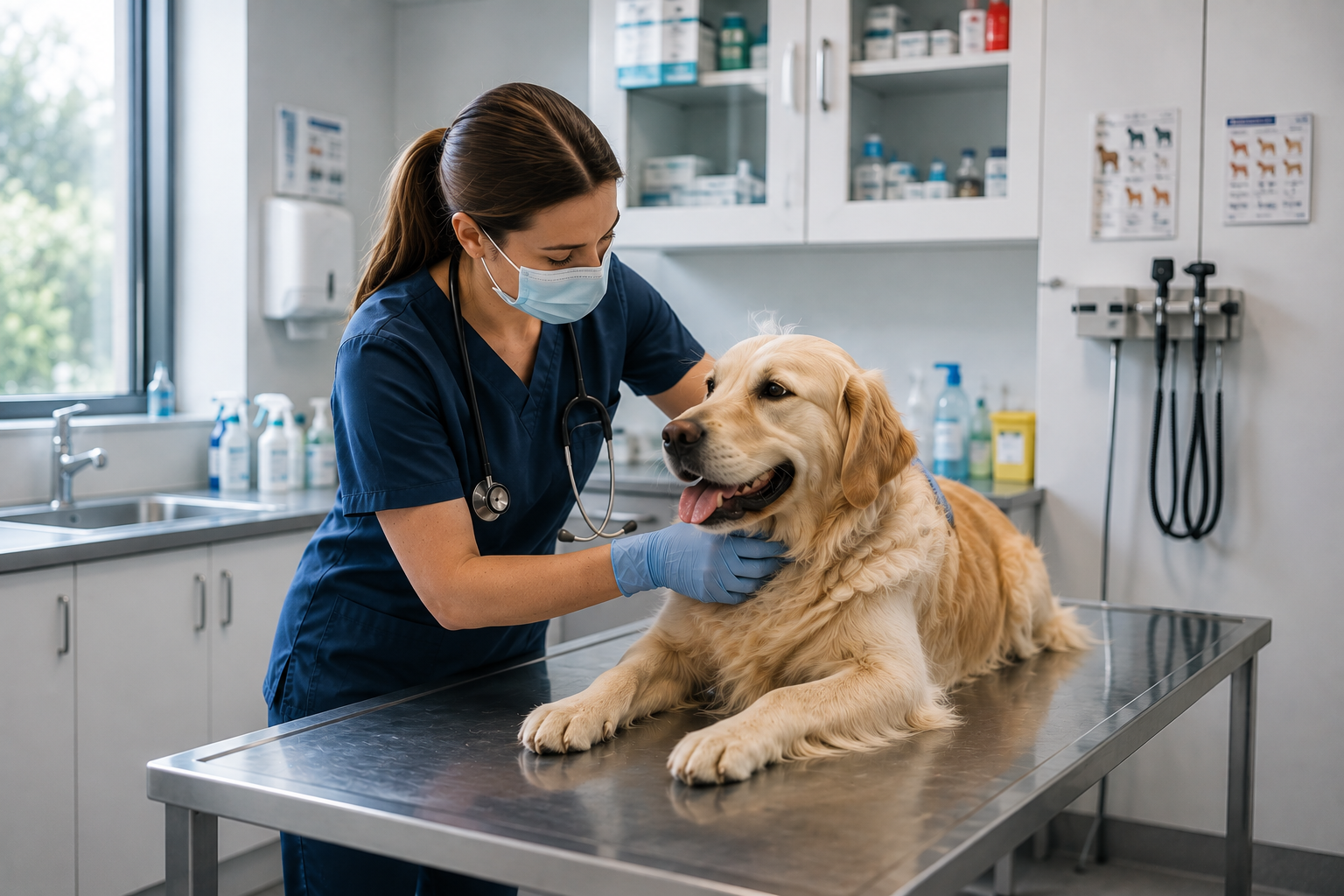
What pollutants can be found in the air at a veterinary clinic?
A clinic comprises a wide variety of environments: examination rooms, preparation rooms, operating rooms, dental suites, laboratories, and kennels or catteries. Sources of pollution therefore vary greatly depending on the activities taking place.
Anesthetic gases
Isoflurane and sevoflurane are commonly used in veterinary anesthesia. Residual emissions can occur, particularly during induction, maintenance of anesthesia, disconnection from the circuit, or the animal’s recovery.
This occupational exposure has been documented. In 2023, the INRS and Cramif published the results of a study conducted at 20 veterinary care facilities, aimed at characterizing professionals’ exposure to volatile anesthetics and identifying appropriate preventive measures.
Controlling these exposures relies primarily on workplace practices, the airtightness and maintenance of equipment, gas exhaust, and adequate ventilation.
VOCs and formaldehyde
Cleaning and disinfecting products, certain solvents, and products used in laboratories can emit volatile organic compounds (VOCs).
Formaldehyde can be encountered, in particular, when handling specimens intended for pathological analysis if they are stored in solutions containing formalin.
In France, formaldehyde is subject to mandatory occupational exposure limit values (OELs): 0.3 ppm as an 8-hour average and 0.6 ppm for short-term exposure.
Concentrations of these various pollutants can vary significantly throughout the day depending on the products used, the activities being performed, and air exchange rates.
Fine Particles
Certain medical procedures, particularly in dentistry, can generate particles and aerosols. Depending on their size, these particles remain suspended in the air for varying lengths of time, and the finest ones can penetrate deep into the respiratory system.
Monitoring PM1, PM2.5, and PM10 helps identify the activities associated with certain spikes in particle levels.
Microorganisms and Bioaerosols
Pets, pet care products, dander, hair, and other biologically derived particles also contribute to the composition of indoor air.
Bacteria, fungi, allergens, and other biological particles may be present in the form of bioaerosols. Controlling them requires a comprehensive approach that combines hygiene, cleaning, ventilation, and proper organization of the premises.
It is important to distinguish between their presence in the air and their ability to cause transmission: the latter depends, in particular, on the infectious agent in question and its mode of transmission.
CO₂: Beware of False Conclusions
CO₂ is primarily used as an indicator of air containment and air exchange in occupied spaces.
A low CO₂ level therefore does not necessarily mean that air quality is satisfactory.
A clinic may be properly ventilated while still experiencing occasional spikes in VOCs, fine particulate matter, or formaldehyde associated with certain activities.
Exhibitions that involve the entire team
Air quality is a concern for all clinic staff, with exposure levels varying depending on their roles and the activities they perform.
Veterinarians and veterinary assistants (VAs) may be exposed, in particular, while preparing examination rooms, providing care and performing procedures, administering anesthesia, cleaning and disinfecting, or caring for hospitalized animals.
Maintenance staff are more exposed to the chemicals used for cleaning and disinfection, while employees working at the front desk and in consultation areas are regularly in contact with animal-derived allergens and particles.
Exposure assessments must therefore take into account workstations, the tasks performed, their frequency, and the time spent in the clinic’s various areas.
What are the health risks?
The potential effects depend on the nature of the pollutants, their concentration, and the frequency and duration of exposure.
In the short term, certain air pollutants can be associated with eye and respiratory tract irritation, headaches, or other symptoms of discomfort. Animal-derived allergens can also trigger allergic reactions in sensitized workers.
Repeated or chronic exposure to certain substances requires special caution. Formaldehyde, in particular, is classified as a human carcinogen and is subject to regulatory occupational exposure limits. Exposure to volatile anesthetics also poses an occupational hazard that has been specifically studied in veterinary facilities.
The potential consequences therefore vary depending on the pollutant involved, which underscores the importance of identifying sources and assessing exposure levels before determining appropriate preventive measures.
And for animals: Air quality also plays a role in controlling the risk of infection
In a veterinary clinic, controlling the environment is essential to limit the transmission of infectious agents among animals, particularly in areas where they come into contact with one another or are kept in close proximity: waiting rooms, examination rooms, dog kennels, cat kennels, hospitalization areas, and isolation areas.
Respiratory Viruses and Caliciviruses: Risks to Consider
Several infectious agents that are subject to special surveillance in veterinary facilities can be transmitted through the respiratory tract, via droplets, or—depending on the agent and the circumstances—via aerosols.
In cats, feline calicivirus (FCV) is a particularly significant concern in group settings and veterinary facilities. It is highly contagious and can be transmitted through direct or indirect contact with contaminated secretions. Aerosol transmission has also been documented in facilities housing cats that shed the virus.
Other pathogens that cause respiratory diseases—such as certain influenza viruses, parainfluenza viruses, herpesviruses, and respiratory coronaviruses—are also included in the prevention and biosecurity measures implemented by veterinary facilities.
The AAHA (American Animal Hospital Association) guidelines identify the following as agents requiring special attention in veterinary hospitals: feline calicivirus, feline herpesvirus, distemper, canine influenza viruses, canine parainfluenza virus, and canine respiratory coronavirus.
An increased risk in areas housing multiple animals
The risk of infection is particularly high when potentially contagious animals are in close contact with vulnerable animals, or when multiple patients are treated one after another in the same facility.
Hospitalization and isolation areas therefore require special attention, as do waiting rooms and examination rooms during outbreaks of infectious diseases.
Very young, elderly, or immunocompromised animals, or those with respiratory conditions, may also be particularly vulnerable.
Air: One Component Among Many in Biosecurity
Controlling infectious agents obviously does not rely on air treatment alone.
It requires a comprehensive strategy that combines the identification and isolation of contagious animals, traffic flow management, hand hygiene, cleaning and disinfection of surfaces and equipment, ventilation and air exchange, and, where appropriate, additional measures to reduce the concentration of airborne particles and microorganisms.
Veterinary biosecurity guidelines place particular emphasis on the isolation of infectious animals and, for aerosol-transmissible agents, specify measures regarding the ventilation of isolation facilities.
Air quality is thus part of a broader approach to preventing cross-contamination and controlling infection risks in veterinary clinics.
Why measure air quality in a veterinary clinic?
Odors do not allow for a precise determination of the nature or concentration of the pollutants present.
Some odors may be present without being noticeable, while olfactory habituation gradually reduces our perception of certain odors.
Measuring allows us to move from subjective perception to objective data.
Observe what happens during the actual activity
A measurement taken over several days under normal operating conditions makes it possible to track changes in CO₂, fine particulate matter, VOCs, and formaldehyde, and to correlate the observed variations with the clinic’s activities.
For example, a spike in particulate matter may coincide with a specific activity, while an increase in VOCs may occur after the use of certain products.
This approach provides a better understanding of where, when, and under what circumstances air quality deteriorates.
Please note: Measuring these parameters does not allow for the direct quantification of microorganisms present in the air, which require specific sampling and analysis methods. Similarly, a general assessment of air quality does not replace the specific sampling methods required for the regulatory evaluation of occupational exposure to a given substance.
And at your clinic, do you know what you're actually breathing in?
NatéoSanté offers a comprehensive air quality assessment conducted over a week of normal activity, monitoring CO₂, fine particulate matter, VOCs, and formaldehyde to identify major fluctuations and the conditions that may cause them.
How Can You Improve Air Quality in a Veterinary Clinic?
Once the main sources have been identified, several courses of action can be considered.
Reducing Pollutants at the Source
The priority is to prevent or reduce emissions: substituting a product when possible, adapting practices, sealing containers, maintaining equipment, checking the tightness of anesthesia circuits, or capturing pollutants at the source.
This approach is consistent with the general principles of occupational risk prevention: avoiding risk and addressing it at its source must remain priorities.
Ensure adequate air exchange
Ventilation and air circulation help refresh indoor air and contribute to the removal of pollutants.
Monitoring CO₂ levels can provide useful information about the level of containment in an occupied space, but it alone is not sufficient to assess all of the pollutants present in the air.
Supplement with air treatment if necessary
When certain sources cannot be completely eliminated, air filtration and purification can serve as a supplementary measure of collective protection, provided that the equipment is suitable for the pollutants in question and properly sized.
Depending on the technologies used, a piece of equipment may, for example, target fine particles, allergens, and certain bioaerosols, or incorporate media designed to reduce certain gaseous pollutants.
An air purifier is therefore no substitute for ventilation, source capture, or good workplace practices. It is part of a comprehensive approach to air quality management.
Understanding Air Quality Better to Take More Effective Action
Anesthetic gases, VOCs, formaldehyde, fine particulate matter, and bioaerosols do not originate from the same activities and do not require the same preventive measures.
Identifying the sources and objectively assessing air quality makes it possible to better target the measures needed to improve the clinic’s indoor environment—for both the staff and the animals in its care.
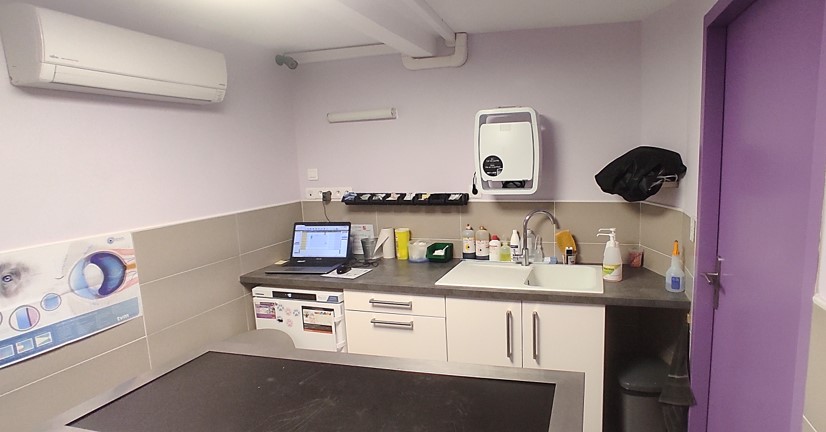
Would you like to improve the air quality in your clinic?
Measurement, results analysis, purification, and long-term monitoring: Discover NatéoSanté ’s solutions designed for veterinary clinics.
Sources: INRS, “Exposure to Volatile Anesthetics in Veterinary Care Facilities,” 2023. – INRS, “Formaldehyde—Occupational Exposure Limits,” updated 2026. – ABCD – European Advisory Board on Cat Diseases, “Guideline for Feline Calicivirus Infection,” updated 2025; AAHA, “Infection Control, Prevention, and Biosecurity Guidelines.”
You might also be interested in

SF2H Recommendations: Air Quality, CO₂, and Prevention of Healthcare-Associated Infections
Learn how the 2024 SF2H recommendations emphasize the role of air quality, CO₂, ventilation, and portable air-purifying devices in preventing healthcare-associated infections.

Air Quality in Elementary, Middle, and High Schools: What Are the Challenges, and How Can We Address Them?
Air Quality in Schools: Challenges and Solutions | NatéoSanté ; meta: CO₂, fine particulate matter, VOCs, pollen, aerosols: What are the air quality challenges in schools, and how can we address them through air circulation, ventilation, and filtration?
Air Quality in Dental Laboratories: What Are the Risks for Dental Technicians, and How Can They Protect Themselves?
Metal dust, silica, resins, chemical fumes… Dental technicians are among the professionals most exposed to indoor air pollution. Learn about the real risks, the latest data for 2025–2026, and practical air purification solutions to protect your laboratory.

Podiatrists: Occupational Risks Related to Indoor Air Quality and Prevention Strategies
VOCs, fine particulate matter, aerosols: What are the real risks associated with air quality in podiatry offices, and how can they be assessed?